
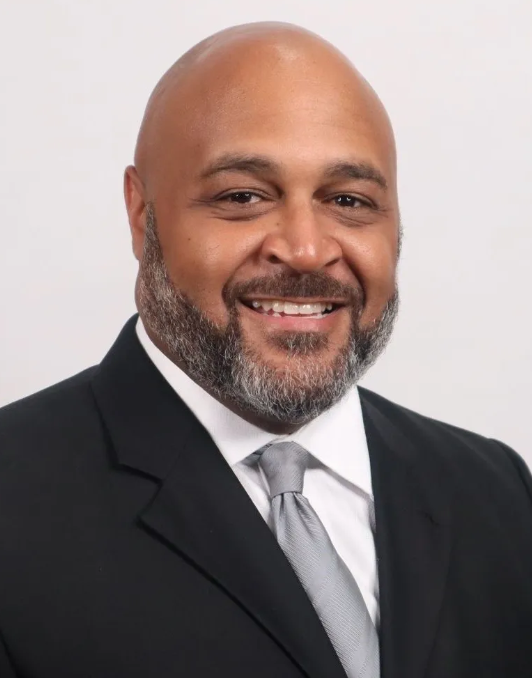
Written by Diallo M. Watts, Sr.
I can still hear my mother’s voice on the phone. “Go around the corner to the KFC on Marlboro Pike and have your dad follow you home.”
He had just called her again, asking for directions—just a few blocks from the house. This was a man who had spent decades as a Metro supervisor in the DMV. Before personal computers, before GPS, before Google Maps, he was the map. He knew every route, every main street, every side road, every back alley across D.C. and the surrounding area.
He started as a tour bus driver and eventually worked his way up to supervisor. Even after he retired, he was still the person people called when they needed directions or a shortcut.
Then it started to slip.
He would get turned around close to home. The calls came more often. Same question, same confusion, just minutes apart.
One day, he called again, asking how to get home.
Not from across the city.
From a few blocks away.
The man who used to be the map couldn’t find his way home. Eventually, I had to take the keys from him. His son told him he couldn’t drive anymore. For his safety. For everyone else’s safety. The very principle he had taught all of us.
Alzheimer’s doesn’t take people all at once. It takes them in pieces. I’m not a doctor. I’m an engineer with twenty-five years of experience solving infrastructure problems. Systems, networks, logistics. But I couldn’t solve the one right in front of me.
When someone you love is declining, and the answers you’re getting aren’t enough, you start looking for anything that might help. That’s how I found hyperbaric oxygen therapy.
I started reading everything I could find. Pressurized oxygen. Helping the body heal in ways it otherwise couldn’t. And the more I read, the more I found—study after study showing real outcomes, especially around recovery and neurological function.
The science was real.
But when I tried to get my father access, I hit a wall. The nearest facility was about 25 miles away. On paper, that doesn’t sound far. In reality, it was traffic, confusion, hospital scheduling, and a man who was already struggling to remember where he was going. They didn’t treat Alzheimer’s. They didn’t have the availability for the number of sessions he would have needed to see a difference.
For him, it wasn’t just difficult. It was impossible. And we were not alone. In every system I’ve ever worked in, this would be called a bottleneck. In healthcare, we don’t fix it. We normalize it. And I was done normalizing it. So I stopped looking at this like a patient problem and started looking at it like a system problem.
Healthcare doesn’t just have a clinical problem.
It has an access problem.
How far someone has to travel.
How often can they realistically show up.
And whether they can sustain it long enough to actually see results. When you look at it that way, the issue becomes obvious. The therapy exists. But for most people, it might as well not.
There are fewer than 1,400 hyperbaric oxygen therapy facilities in the entire United States. In a country with more than 500,000 private physician practices, patients receive care every day.
So I went deeper.
I started talking to the people who build these chambers. The engineers behind them. Bret Faircloth, who helped design our chamber, also serves as Chairman of the ASME PVHO Committee. I worked with experienced operators and technicians, including those with decades in manufacturing, safety, and over 25,000 hours of patient treatment. I also met with leadership from major hyperbaric manufacturing companies and physicians who had led the American College of Hyperbaric Medicine.
And no matter who I talked to, I kept hearing the same thing. The interest is there. The outcomes are there. But access is limited. That’s when I saw it clearly.
This wasn’t just a medical issue. It was an infrastructure problem.
We’ve seen this before. Dialysis, imaging, ambulatory surgery, and urgent care—each one started inside hospitals and eventually moved closer to the patient. Hyperbaric therapy is next.
That’s what led me to start RxAir360. I started building what I couldn’t find—a hyperbaric chamber designed for physician offices. Something compact, practical, and built to fit into everyday clinical environments.
The goal is simple: bring access closer to the patient.
My father didn’t get to see what his diagnosis set in motion. He didn’t see the patents, the prototype, or the team now working to bring this technology into everyday practice. But every step forward carries his story with it. Every chamber is placed closer to a patient who needs it. Every family doesn’t have to go through what we went through.
The man who carried an entire city’s transit system in his head deserved better. And so does every patient still waiting for access. I’m writing a book about this journey called The Access Gap, The full story of how a kid from the DMV watched his father fade and decided to do something about it. For too many families like mine, time runs out before access ever shows up. Because the access gap is real. And someone has to close it.
Diallo M. Watts, Sr. is the Founder and CEO of RxAir360 Inc., a medical technology company developing a patented hyperbaric oxygen therapy chamber designed for physician offices. A trained electrical engineer with over 25 years of experience, he leads the company’s regulatory, engineering, and commercialization strategy. Under his leadership, RxAir360 has raised over $3.65 million in early-stage funding and is advancing toward FDA 510(k) clearance. He is the author of the forthcoming book The Access Gap: How a Son’s Mission Became a Movement to Change Healthcare.