Category: Article

  • The Real Addiction Nobody Talks About in Business

    The Real Addiction Nobody Talks About in Business

    PRESENCE LEADERSHIP

    Let me ask you something nobody asks in a boardroom.

    Are you keeping your forehead smooth on your own — or do you need something to do it for you?

    I am not talking about skincare.

    I am talking about the moment you realized that feeling everything was too much. That the tension in your face, your jaw, your chest — the signals your body was sending — were inconvenient. Unprofessional. Too loud for the room you were trying to stay in.

    So you found a way to turn the volume down.

    Maybe it was Botox. Maybe it was the third glass of wine on a Wednesday. Maybe it was the 6am workout that left no room for anything else, or the calendar so full that silence became the enemy. Maybe it was just work — more of it, always more — because as long as you were producing, you did not have to feel what was underneath.

    We call these things self-care. Stress management. Hustle culture. Ambition.

    I call them what they are: the real addiction nobody talks about in business.


    The Body That Stopped Talking

    Here is what I have seen in sixteen years of working with high-achieving women:

    The body never stops sending signals. It just gets quieter and quieter — until it stops waiting to be heard and starts speaking in symptoms instead.

    The frozen forehead is not just aesthetic. When we paralyze the muscles of expression — whether with a needle or with years of suppression — we interrupt something fundamental. The face is not just the messenger of our emotional state. It is, as clinical research now confirms, an active participant in creating it.

    When the corrugator muscles — the ones that furrow between your brows when something is wrong, when something needs attention, when your body is trying to tell you the truth — are silenced, something else goes quiet too.

    Emotional intelligence. The ability to read the room, to feel what is not being said, to access the deeper knowing that sits beneath logic and strategy.

    The genius mode.

    And for women especially — for whom emotional intelligence is not a soft skill but a leadership superpower — this is not a small loss.


    Three Faces of the Same Pattern

    Botox. Overwork. Numbing.

    They look different from the outside. In the business world, one is considered a beauty choice, one is considered ambition, and one is rarely discussed at all. But underneath, they are running the same program:

    Get away from what the body is feeling. Keep going. Stay functional. Do not let anyone — including yourself — see what is actually happening.

    I know this pattern intimately. Twenty-two years of competitive sport taught me to override pain signals with discipline. Fifteen years in corporate refined that into an art form. And the body — patient, persistent, loyal to the truth even when I was not — eventually stopped accepting the override.

    It spoke louder. In places I could not ignore.

    That is the moment most women arrive at my work. Not when things are bad. When they have been managing bad for so long that managing itself has become the problem.


    What Gets Lost When We Numb

    We live in a time that is asking something new of leaders.

    The old model — push harder, feel less, perform more — is visibly breaking down. Burnout is not a personal failure. It is the predictable outcome of a system that treated the body as a machine and emotion as a liability.

    What is emerging now requires something different entirely.

    Feminine leadership qualities — receiving, sensing, connecting, reading what is unspoken, leading from presence rather than pressure — are not trends. They are the intelligence the moment actually needs.

    But here is the thing: you cannot access those qualities from a numbed nervous system.

    You cannot receive when you are too busy producing. You cannot sense the room when your own signals have been muted for years. You cannot lead from presence when presence itself has become uncomfortable.

    The real cost of the addiction to numbing is not the wrinkles you are trying to prevent or the exhaustion you are trying to push through.

    It is the loss of access to your own intelligence.


    The Return Is Not Dramatic

    I want to be honest about what coming back to yourself actually looks like.

    It is not a retreat. It is not a breakdown. It is not a dramatic moment of awakening.

    It is ten minutes in the morning, before the phone, before the calendar, before the first demand of the day — in your body. Feeling what is actually there. Releasing what has accumulated. Returning to yourself before you give yourself to everything else.

    It is learning to read your own signals again. The jaw that tightens in certain meetings. The breath that shallows when someone speaks over you. The eyes that go empty when you are performing rather than present.

    These are not weaknesses. They are data. The most precise leadership intelligence available to you — and it is free, it does not require a subscription, and it does not wear off after three months.

    The woman who can feel herself can lead anything.

    The woman who has numbed herself to stay functional is leading on borrowed time.


    You Were Never Supposed to Hold It All Alone

    The real addiction in business is not alcohol or ambition or even Botox.

    It is the belief that you have to keep it together at all costs. That feeling is weakness. That the body’s signals are inconvenient. That the only way through is to push harder, smooth it over, and never let them see you waver.

    That belief is exhausting. And it is running most of the high-achieving women I know.

    You were not built to hold your forehead smooth through willpower.

    You were built to feel, to lead, to connect — from a body that is fully inhabited, fully alive, fully yours.

    That is not soft. That is the most powerful thing in the room.

    And it starts the moment you stop numbing — and start listening.


    Renée Ambarees is a Presence Leadership Coach, international bestselling author, and one of the first certified Face Yoga trainers in Europe. With 22 years in competitive sport, 15 years in corporate, and a gift for somatic and intuitive intelligence she has carried since childhood, she has guided over 10,000 people through transformation — career changes, country changes, continent changes, leaving toxic fields, and coming home to themselves. She is the founder of the Yoga4Face® method, the Smile Revolution, the Back2Paradise framework, and the 10 Magic Minutes™ — a daily body reset practice that changes everything before the day even begins.

    Be Seen. Be Felt. Be Unforgettable.

    → reneeambarees.comhttps://drive.google.com/drive/folders/1oUZG5sspWHNCVMm8wZGmfrRbLX6lBim3

  • Visibility Is Not Vanity: Why the Right People Need to Hear Your Story

    Visibility Is Not Vanity: Why the Right People Need to Hear Your Story

    Written by Dr. Tina J. Ramsay

    Many purpose-driven entrepreneurs, educators, authors, coaches, and leaders struggle with visibility. Not because they lack expertise. Not because they lack passion. Not because they have nothing valuable to offer. They struggle because they have convinced themselves that visibility is vanity.

    For years, I believed that if I worked hard enough, served enough people, and produced quality work, the right opportunities would eventually find me. Like many mission-driven individuals, I focused almost entirely on the work itself. I believed that excellence would speak for itself.

    Excellence matters. But excellence without visibility often remains undiscovered.

    What I eventually learned changed the way I viewed leadership, influence, and service: visibility is not vanity. Visibility is service.

    The truth is simple. Your expertise, experiences, lessons, and perspective cannot help the people they were meant to serve if no one knows you exist.

    Every day, talented people remain hidden. The educator with a strategy that could help struggling families stays silent because she does not want to appear self-promotional. The entrepreneur with a product that could improve lives hesitates to talk about it because he fears judgment. The author with a message that could inspire thousands never finishes the book because she doubts anyone will read it. The leader with years of wisdom questions whether anyone would care to hear what he has learned.

    Meanwhile, louder voices dominate the conversation—not necessarily because they have greater expertise, but because they understand the power of visibility. This creates a troubling reality: many of the people most qualified to create meaningful change are often the least visible.

    When people think about visibility, they usually focus on what they might gain—more followers, more clients, more opportunities, or more recognition. But few people stop to consider what is lost when they remain invisible.

    Someone may never discover the solution you have already found. Someone may never receive the encouragement you could have offered. Someone may continue struggling because the lesson you learned through experience was never shared. Someone may abandon a dream because they never heard the story that would have given them hope.

    Your story is not valuable simply because it belongs to you. Your story is valuable because of what it can unlock in someone else.

    The challenges you overcame may become a roadmap for another person. The mistakes you survived may save someone years of frustration. The lessons you learned through failure may become someone else’s breakthrough. The experiences you sometimes hesitate to discuss may be the very things that make your voice uniquely valuable.

    Impact requires visibility—not because visibility is the goal, but because visibility is often the vehicle.

    There is an important distinction between visibility and attention. Attention seeks applause. Visibility seeks impact.

    Attention asks, “How can I get people to notice me?” Visibility asks, “How can I help the people who need what I have to offer find me?”

    That shift changes everything.

    Purpose-driven visibility is not about becoming famous. It is not about chasing likes, followers, or viral moments. It is not about proving your worth through numbers. Purpose-driven visibility is about becoming available—available to serve, teach, encourage, inspire, and lead.

    When viewed through that lens, visibility becomes an act of stewardship rather than self-promotion. You are no longer trying to make yourself look important. You are simply making your message accessible to the people who need it.

    That perspective changes how we approach our platforms, businesses, and opportunities. Instead of asking, “What will people think of me?” we begin asking, “Who might benefit if I share this?” Instead of worrying about criticism, we focus on contribution. Instead of seeking validation, we seek impact.

    Your story is bigger than your business.

    Many people assume their professional expertise is the only thing worth sharing. In reality, people often connect with your humanity before they connect with your credentials. They connect with the struggle, the journey, the lessons, and the perseverance.

    Stories create trust in ways facts alone never can. Stories remind people they are not alone. Stories build bridges between experiences, backgrounds, and perspectives. Stories help people see possibilities where they once saw obstacles.

    In a world overflowing with information, authenticity has become one of the most valuable forms of leadership. People are surrounded by content every day. What they are truly searching for is connection.

    They want real stories. Real lessons. Real leadership. Real people willing to share both victories and challenges.

    You do not need millions of followers to make a difference. You do not need to be perfect to be influential. You do not need all the answers before sharing what you have learned. You simply need the courage to show up and contribute to the conversation.

    Someone is waiting for the message you almost didn’t share. Someone is searching for the answer you already possess. Someone needs the perspective that only you can provide.

    The question is not whether your story matters. The question is whether you are willing to let the people who need it hear it.

    Because visibility is not vanity.

    Visibility is service.

    And the right people need to hear your story


    About the Author

    Dr. Tina J. Ramsay (h.c.) is the Founder and CEO of CTR Media Network, an award-winning global media company dedicated to helping purpose-driven entrepreneurs, authors, speakers, educators, nonprofits, and business leaders increase their visibility and expand their impact. Through podcasting, television distribution, digital media, press releases, blogging, and strategic storytelling, she helps clients position themselves as trusted authorities in their industries.

    Under her leadership, CTR Media Network has grown into an international media platform with distribution reaching more than 175 countries and 3.6 billion potential households and digital touchpoints. Through its multimedia ecosystem, CTR Media Network provides opportunities for individuals and organizations to amplify their message, build credibility, and create meaningful influence on a global scale.

    Known for her commitment to authentic storytelling and purpose-driven visibility, Dr. Ramsay believes that when the right message reaches the right audience, it has the power to inspire change, create opportunities, and leave a lasting legacy.

    To learn more about CTR Media Network, visit http://www.ctrmedianetwork.com or contact the team at info@ctrmedianetwork.com.

  • The Body Knows Before the Mind Can Explain

    The Body Knows Before the Mind Can Explain

    Why high-performing women get pulled into narcissistic dynamics — and how to return to yourself.

    Written by Renee Ambarees.

    There is a pattern I see again and again in the women who come to me.

    They are accomplished, intelligent, intuitive, driven. Often they are CEOs, founders, executives, directors, creatives, healers, leaders. Women who have built something real. Women who know how to perform under pressure. Women who know how to hold a room, carry responsibility, read complexity, and still show up with grace.

    And somewhere along the way, someone got close enough to begin dismantling exactly that.

    Not all at once. Slowly. Subtly. Through criticism disguised as concern. Through projection disguised as truth. Through emotional withdrawal, confusion, blame, comparison, or control. Through the kind of manipulation that does not always look dramatic from the outside — but lands deeply in the body.

    This is why so many high-performing women ask the same question:

    How did I not see this?

    I am not naive.
    I am not weak.
    I know people.
    I have led teams.
    I have navigated pressure.
    I have built a life, a career, a business.

    So why did I stay? Why did I explain? Why did I shrink? Why did I keep trying to make sense of something that kept hurting me?

    Here is what I want you to understand:

    You were not targeted because you were weak.
    You were targeted because you were strong.

    Narcissistic dynamics are often drawn to the very qualities that make a high-performing woman exceptional: her empathy, her standards, her loyalty, her desire to understand, her capacity to hold space, her commitment to getting it right.

    These are not weaknesses. They are strengths.

    But in the wrong hands, they become entry points.

    Your empathy gets used to keep you explaining.
    Your excellence gets used to keep you proving.
    Your loyalty gets used to keep you staying.
    Your self-reflection gets turned into self-doubt.

    And slowly, the woman who once felt clear begins to question herself. This is where most conversations about narcissistic dynamics miss something essential.

    We talk about the psychology: gaslighting, confusion, push and pull, emotional manipulation, control, love bombing, silent treatment. And yes, these patterns matter, but your body knows first. Before your mind has language, before you have proof, before you can explain what is happening, your body is already responding.

    Your breath becomes shallow.
    Your jaw tightens.
    Your shoulders lift.
    Your sleep changes.
    Your stomach contracts.
    Your eyes lose their softness.
    Your smile becomes something you perform instead of something you feel.

    You may still be functioning. Still leading. Still answering emails. Still holding meetings. Still appearing composed. But inside, your nervous system is no longer at ease. You are in the tunnel.

    This is what happens when criticism, manipulation, lies, or projection enter the system. The body contracts. The field of vision narrows. The voice freezes. The face tightens. The self becomes smaller, not because that is who you are, but because your body is trying to protect you.

    And because high-performing women are often trained to override discomfort, they may miss the signal.

    They push through.
    They communicate better.
    They try harder.
    They become more patient.
    They analyze the other person.
    They look for the missing piece.
    They wonder if they are the problem.

    But the body keeps whispering: Something is not right here.

    The turning point comes when a woman stops fighting that signal and starts listening.

    Not as a victim.
    Not as someone broken.
    Not as someone who needs to be fixed.

    But as a leader returning to her own body.

    Because your body is not betraying you. Your body is trying to bring you home.

    This is why I created the 4 Magic Moves™ — a simple body-based reset designed to help you come back to yourself in minutes.

    Not through more analysis.
    Not through performing positivity.
    Not through pretending it did not hurt.
    Not through another conversation with someone committed to misunderstanding you.

    Through the body.

    The first move is about getting your eyes out of the tunnel.

    When you are emotionally impacted, your vision often narrows. You lock onto the threat, the words, the person, the pain. Your system goes into freeze or shutdown. The first step is to open your eyes again — literally and energetically. To widen your vision. To let your body remember: there is more than this moment.

    The second move is acceptance.

    Not approval. Not agreement. Acceptance means recognizing what is happening inside your body without abandoning yourself. I am tense. I am hurt. I am frozen. I am overwhelmed. I am here. The moment you stop fighting your body’s response, you begin to lead it.

    The third move is boundaries.

    A body without boundaries becomes a container for everyone else’s projection. Boundaries begin before words. They begin as an inner declaration: this is not mine. I do not have to carry this. I can stay connected to myself. I can be loving and clear. I can choose what enters my system.

    The fourth move is your real smile.

    Not the smile you perform to keep the peace.
    Not the smile that says, “I’m fine.”
    Not the smile that covers the truth.

    Your real smile.

    The one that rises when your body recognizes itself again. The one that tells you that you have returned. The one that becomes your compass back to peace, presence, and truth.

    Your smile is not just a smile.

    It is a key.

    A key back to your breath.
    A key back to your body.
    A key back to your power.
    A key back to the part of you that was never broken.

    This is the work of returning.

    Not becoming someone new.
    Not rebuilding from nothing.
    Not proving your worth.

    Returning.

    To your breath.
    To your body.
    To your boundaries.
    To your real smile.
    To the woman beneath the performance, the pressure, the pleasing, the over-explaining.

    In ten honest minutes, your body can shift.

    You can feel air again.
    Your face can soften.
    Your eyes can open.
    Your nervous system can begin to settle.
    Your body can remember that you are here now, and you are allowed to come back.

    This is not a surface makeover. It is a return from the inside out. Because it is written all over your face. Your face tells the story of what you are carrying. Your breath tells the truth about what your mind is still trying to explain. And your real smile reveals the moment you stop carrying what was never yours.

    High-performing woman, your strength was never the problem.

    Your empathy was never the problem.
    Your standards were never the problem.
    Your capacity to love, lead, feel, build, and hold space was never the problem.

    The problem was forgetting that your body gets to have a voice too.

    And when you listen, it will lead you back.

    Begin with the free 4 Magic Moves™ Body Reset — four short practices to help you release emotional tension, calm your nervous system, reconnect with your body, and activate your real smile as your inner compass.

    Your body already knows the way back.

    Your smile is your key.


    Renée Ambarees is the founder of Yoga4Face®, international bestselling author, keynote speaker, and creator of the Smile Revolution. She works with high-performing women, leaders, entrepreneurs, and executives who are navigating or recovering from narcissistic dynamics — helping them return to their body,
    their truth, and their real smile.

    Through her body-based work, Renée combines facial embodiment, nervous system regulation, emotional release, and presence leadership to help women reconnect with themselves from the inside out. Her signature practices,
    including the 4 Magic Moves™ and 10 Magic Minutes™, support women in releasing emotional tension, calming the nervous system,
    and activating the real smile as an inner compass.

    Renée’s message is simple and powerful: It is written all over your face.
    Your face is your business card. Your smile is your key.

    Learn more at reneeambarees.com
    Watch the Back2Paradise Show every Sunday on YouTube.
    Contact: contact@yoga4face.com
    LinkedIn:https://www.linkedin.com/in/ren%C3%A9e-isermann/

    Published: 06-12-2026

  • Energy Leadership Is the New Competitive Advantage

    Energy Leadership Is the New Competitive Advantage

    Strategy Alone Is Quietly Failing 

    There is a particular kind of exhaustion that does not show up on any performance review.

    It lives behind the eyes of people who have built real things. Who made hard decisions. Who still show up every morning looking like they have it together.

    On the outside, success.

    On the inside, something quietly collapsing.

    Most leaders do not talk about it. The language of business has no vocabulary for it. There is no word for the moment a high-achieving person realises they have become a stranger to themselves.

    This is not a burnout article. Burnout is a symptom.

    What lies beneath it requires a different conversation. One about energy.

    I know what happens when that energy collapses.

    Because it almost killed me.

    I was a high achiever. The kind of person others pointed to and said, “She has it together.”

    Then came the cancer diagnosis.

    Not from weakness. Not from bad luck.

    From years of swallowing pain to keep the peace. A colleague I trusted was systematically betraying me. Instead of responding, I absorbed it. My nervous system had been conditioned to prioritise everyone else’s comfort over my own truth, and I did not even know it.

    When we become energetically unstable, everything built on that energy collapses. First the mind. Then the emotions. Then the body.

    This is not just my story. It is the story of most leaders who are honest enough to admit what is really going on.

    The Problem Nobody Is Naming

    Research from McKinsey shows 75% of senior leaders report burnout. The response is always the same. Better systems. Clearer KPIs. More delegation.

    Nobody asks the one question that actually matters.

    What energy are you leading from?

    Every business reflects its leader’s inner state. Pricing reflects self-worth. Boundaries reflect the nervous system. Visibility reflects emotional safety.

    Here is what that looks like in practice.

    A founder I worked with kept undercharging despite extraordinary results. Every time she raised her prices, her nervous system resisted. The business problem looked financial. The real problem was survival conditioning. Once that pattern cleared, her pricing changed. So did her revenue.

    Most business problems are not strategy problems. They are nervous system problems running beneath every decision a leader makes.

    What Energy Leadership Actually Means

    Energy leadership is the ability to lead from five integrated intelligences at once – I call it multidimensional intelligence.

    Mental: strategy and logic. But a brilliant plan built from fear still carries the frequency of fear. It awakens when a leader stops outsourcing authority and starts trusting inner knowing.

    Emotional: processing what you feel rather than suppressing it. Unprocessed grief becomes self-sabotage. Fear of rejection becomes underpricing. It awakens when challenges become invitations when a leader stops asking why and starts asking what it is teaching them.

    Somatic: the intelligence of the body. When the nervous system regulates, decisions sharpen and leadership becomes magnetic rather than exhausting. The somatic intelligence awakens through peace not as a reward, but as a practice. The most powerful decisions are never made from urgency. Peace expands what urgency collapses.

    Sensory: the capacity to feel truth before logic catches up. A competitive advantage most leaders have abandoned. It returns when a leader stops forcing and starts listening to the room, to the body, to what is not being said.

    Spiritual: intuition and purpose. Moving from alignment rather than pressure. It awakens the moment a leader chooses their own truth over inherited conditioning.

    When these five work together, leadership stops being something you perform. It becomes something you embody.

    Embodiment does not happen through insight alone.

    It happens when the three layers blocking each intelligence are cleared: stored patterns in the body, survival coding in the nervous system, inherited emotional programmes in the mind.

    The F.L.O.W. Method is the 28-day programme I built from my own journey through collapse and back. Through somatic practices, nervous system regulation, breathwork, and emotional processing, it clears all three simultaneously.

    The body releases fatigue, mental fog, physical tension, trapped energy that can be dissolved.

    The nervous system is reset. Not managed. Reset. Peace becomes the default, not something a leader performs before every difficult conversation.

    The mind is freed from the guilt, the survival thinking, the unworthiness quietly running decisions for years that no strategy has ever fixed.

    When all five intelligences are finally free, leadership stops being something you force.

    It becomes your competitive advantage.

    The leaders who will shape the future are not the ones who can push the hardest.

    They are the ones who can remain deeply connected to themselves while carrying immense responsibility.

    If that is the leader you are becoming, the first step is awareness. The second is choosing differently. This is your next step.

    Find Out If You Are Ready to Reset

    The future of leadership belongs to people who understand that energy leadership is not a concept. It is the foundation of every clear, embodied decision.


    Dr. Neja Zupan is an Energy Leadership Mentor and Founder of Energy Masters Academy.
    She helps business owners, leaders, and change makers elevate the energy of their brain, body, and nervous system so they can lead, create, and build from their full capacity.
    With over 30 years of experience, she has become internationally recognized for her work in Inner Energy Mastery and Recalibration, guiding entrepreneurs and purpose-driven leaders to transform energy into their most valuable leadership asset.
    Her authority is not built on theory alone.
    In 2013, she was given a 5% chance of survival after being diagnosed with aggressive cancer. She chose a different path entirely and began mastering the deeper relationship between energy, nervous system regulation, and human potential. She healed.
    The principles that restored her life became the foundation of the work she now brings to leaders around the world. Because when the system carrying your success changes, everything built on top of it changes too.
    Follow her at Instagram @dr.neja.zupan.institute or LinkedIn @drnejazupan

  • The Thousand Small Surrenders — Chapter 2 The Return -Aware, and Almost Ready

    The Thousand Small Surrenders — Chapter 2 The Return -Aware, and Almost Ready

    By Jyothi Devarakonda

    Aks and Maya returned after their long-awaited vacation rejuvenated, refreshed, but more so ignited with a new purpose: bringing day-to-day happiness back and stopping the endless chase for perfection.

    This was different from the usual kind of return where you come back thinking about unpacking, laundry, and starting to build the next week’s routines and meal plans. Maya and Aks returned with something they hadn’t packed: awareness. And unlike sunscreen or good intentions, this one didn’t get left behind at the hotel.

    The beach had given them rest. The conversations on that balcony had given them something rarer: the ability to identify their burnout and pause long enough to appreciate each other instead of slipping into the “why do I have to do it all?” zone. They realized the equation of give and take, and through maturity understood that sometimes giving up a little actually gives you more.

    Now that they had named it, they couldn’t un-see it. Which felt both terrifying and oddly like relief.

    The first week home was intentional in ways they hadn’t been in years, Conscious choices for food, taking intentional walks, exercising even if it is shorter than planned but feeling happy about it and not beating up oneself for not completing the full hour.

    Aks made breakfast on Tuesday, not because it was his turn on some invisible rota, but because he wanted to. And for the first time in longer than she could remember, Maya actually sat down with her coffee.

    Not scrolling. Not mentally auditing whether the lunches were packed well enough or worrying  about what might happen if she didn’t respond to emails within the next seven minutes. Just sitting.

    She had found her version of stillness, and it looked exactly like this: a warm mug, a few unhurried minutes, and the little journal she’d started keeping beside the kettle. She let her thoughts drift onto the page, not in any organised way, just little doodles, reminder notes, fragments of feeling. Seeing them flow out and land somewhere made everything feel oddly manageable.

    Her morning ritual became a quiet conversation with herself:

    It’s okay. Be thankful for this day. Give it your best. The rest will get done.

    It always did.

    Aks, meanwhile, was learning something of his own. He had always shown up, but showing up, he realized, isn’t the same as being present.

    People can give you all the love they want, but if you’re not still enough inside to actually receive it, you end up feeling lonely even in a room full of people who love you. He had been that person. Technically there, emotionally elsewhere.

    Now he was practising the small, deliberate act of noticing: the way Maya laughed at her own jokes before she finished them, the particular chaos of a Tuesday morning, the fact that his kids were growing up in the margins of his distraction.

    Even the kids started feeling the pause and calm around them. Dinner was no longer a negotiation. They planned and cooked as a family. The kids, buzzing with the stored energy of a full school day, needed gentle nudging away from their screens and into their chairs. Before, that nudging had come with an edge: deadlines, consequences, the quiet stress of two parents trying to compress family time into a thirty-minute slot before bed.

    Now the reminder was different.

    “Hey, it’s our time together.”

    That was it. No ultimatums. No countdown.

    Something shifted.

    The kids started showing up on time, almost of their own accord. They were chattier, less resistant, more themselves. Maya and Aks looked at each other one evening across a table full of food, interrupted sentences, and the dog hopefully positioned beneath the youngest’s chair, and quietly understood something:

    They didn’t need to carry it all.

    They had been so busy managing the family that they’d forgotten to simply trust it. The calm they brought into the room had given their kids permission to rise and meet it.

    They were learning to trust the process.

    Maya went back to work the following Monday with the energy of someone who had finally figured something out.  By Wednesday, she found things were moving well but when she took a moment to reflect, felt there was something not aligning with the way things were happening around her.  On paper, everything was fine. Numbers solid. Emails answered. She smiled in meetings and mentored where she could. But somewhere between the KPIs, the quarterly deliverables, and the third hiring decision she privately disagreed with, she noticed it: a hollow feeling.

    Not burnout exactly. Something quieter. Like a note slightly off-key that nobody else seemed to hear.

    One evening she told Aks about a moment that had unsettled her, being nudged toward a shortcut she didn’t believe in. Small enough to dismiss. Significant enough to stick.

    Aks listened. Then, with the clarity of someone who truly knows you, he said simply:

    “Babe, you’re not the kind of person who can think of short-changing anyone. You always end up giving more of yourself, not less. That’s just who you are.”

    It wasn’t a solution. But it was a mirror.

    Her purpose had always been helping people grow. But lately, that purpose was getting harder to find, buried under targets, diluted by under-resourced teams set up to quietly fail, pressed thin by a culture that measured output and called it impact.

    She was sleeping better. Present with her kids. Softer with Aks. And yet there it was again, that low, persistent dissonance.

    Because here’s what she was beginning to understand: repeated misalignment doesn’t just create restlessness. Left unaddressed, it quietly rebuilds the very burnout you just climbed out of.

    Maya stared at the ceiling that night, the question arriving slowly and then all at once:

    What do you do when the life you’re building is healthy, but the work inside it isn’t yours anymore?

    She knew she was on the right thought process, but now needed time to understand her purpose at work and what truly felt like the real Maya.


    Jyothi Devarakonda
    Certified Advisor · Leader · Life & Transition Coach · Founder, Guiding Eagle Inc

    ICF Accreditation Candidate · 2026

    Jyothi didn’t start her journey as a coach — she started by navigating change herself. From leading interior design projects to building a 20+ year career in banking and financial advisory, and then starting over as an immigrant in Canada, she knows firsthand what it means to rebuild from the inside out.

    As a certified advisor and leader, she brings both professional rigour and lived experience to her work. Currently completing her ICF accreditation — the gold standard in coaching credentials — she works at the intersection of personal transformation and practical strategy, helping individuals move from self-doubt and survival mode into clarity, confidence, and a life they have consciously chosen.

    Along the way, she noticed something that kept showing up: no matter how successful someone looked on the outside, misalignment in even one area of life quietly dimmed everything else. That insight led her to create Guiding Eagle — where she now helps individuals, especially women in transition, step into the fullest, most aligned version of themselves.

    Her work is built on aligning four core pillars — space, finance, career, and relationships — because she believes lasting transformation happens when both inner confidence and outer circumstances shift together. Through coaching, workshops, and digital programs, she helps people build lives and help people identify their decision making and acceptance patterns which impacts all areas of our happiness.

    Connect with Jyothi –

    https://www.guidingeagle.com ; Tel # 587-741-3737

    Book a call to start your journey – https://calendar.app.google/UREtBNj6gvFDSGeU8

    “When (Jnana) True knowledge guides us, (Dharma) True purpose grounds us , and (Karma) our conscious action follows- life begins to align.

    Published: 05-29-2026

  • Man in the Mirror — The Relationship That Changes Everything

    Man in the Mirror — The Relationship That Changes Everything

    By Renée Ambarees

    Michael Jackson sang it. Most people heard it as a pop song.

    But he was speaking a profound truth: if you want to make the world a better place, take a look at yourself and make a change.

    I have been thinking about him a lot lately. A man of extraordinary gift and extraordinary pain. Misunderstood. Unseen behind the performance. He gave the world magic from a place of deep longing to be truly seen — and the world projected onto him what it could not face in itself.

    How much of that do you recognize in your own life?

    Here is the question I want to ask you — and I want you to sit with it honestly: how well can you really look at yourself in the mirror and stay there? Not glance. Not criticize and look away. Actually stay, with curiosity and kindness, and meet what is looking back at you?

    Because here is what I have learned working with more than 10,000 women across the world: how long you can truly meet yourself in the mirror is exactly how much genuine presence you can offer to everyone else in your life. No more. No less.

    The mirror is not about vanity. It is about truth.

    Your face tells the full story of your inner relationship. The jaw holding tension is holding back words never spoken. The eyes that look away quickly are avoiding something they don’t want to see. The smile that appears on cue — practiced, polished, automatic — is the smile of a woman who has learned to perform connection instead of feel it.

    And that performed connection follows you everywhere. Into your relationships. Into your work. Into every room you enter and every conversation you have. People feel it, even when they cannot name it. They sense the distance between who you are presenting and who you actually are. And that distance — however small — creates a gap in every connection you try to build.

    Do you know your longings? Can you name what you truly want — not what you are supposed to want, not what looks good from the outside, but what your body has been quietly asking for, maybe for years? Do you recognize your genius? The particular way you see the world, the gift that is so natural to you that you have probably underestimated it your whole life?

    What do you see when you look in the mirror — really look?

    Most women I work with have stopped looking. Not because they are vain or shallow, but because the mirror became a place of judgment instead of a place of meeting. They learned early — from family, from culture, from a thousand small moments of being told they were too much or not enough — that looking at themselves too closely was dangerous. That wanting too much was selfish. That shining too brightly would cost them love.

    So they looked away. And kept looking away.
    Until the woman in the mirror became almost a stranger.

    This is where every relationship problem begins. Not with the wrong partner. Not with poor communication skills. Not with a difficult childhood, though that plays a role. It begins with the relationship to yourself — and that relationship lives in the body, in the breath, in the face you bring into every room.

    When a woman can meet herself fully — with the same kindness and patience she offers everyone else — something profound shifts. She stops shrinking in rooms. She stops performing warmth she does not feel. She stops giving from empty and then wondering why she feels invisible. She becomes magnetic.
    Not because she tried harder or smiled more brightly. Because she finally stopped hiding from herself.

    I call this pure magnetic beauty. It cannot be manufactured. It can only be released — the moment you decide to show up for yourself the way you have always shown up for others.

    Your smile is the key. Not the social smile. Not the survival smile. The real one — the one that starts deep in the body and rises naturally, that says:
    I see myself. I am here. I choose myself today.

    That smile opens closed doors. In your closest relationships. In your professional life. In the way strangers respond to you on the street. Not because it is pretty. Because it carries truth. And truth, in a world full of performance, is irresistible.

    Michael Jackson wanted to make the world a better place. So do you. So do I.

    But it begins here. In the mirror. In the willingness to stay with what you see — and love it anyway. Not perfectly. Not all at once.
    But honestly, and with growing devotion.

    Because the world does not need more performance.
    It needs more women who have come home to themselves.

    My book, The Smile Code, launches September 2025. Begin now with my free 4 Magic Moves at reneeambarees.com — four simple practices to bring you back into your body and into genuine connection with yourself. And join me every Sunday on Back2Paradise, Your Smile Is Your Key.

    The most important relationship of your life is waiting. It starts with you.
    It starts in the mirror. It starts today.


    Renée Ambarees is the founder of yoga4face®, international bestselling author, keynote speaker, and creator of the Smile Revolution. Across five decades of lived experience — as an elite athlete, corporate professional, and embodiment guide — she has dedicated her life to understanding the connection between body, mind, and soul. Gifted from an early age with heightened intuition and healing presence, she has worked with more than 10,000 clients worldwide, guiding women back into their bodies, their truth, and their real smile.

    Her book, The Smile Code, launches September 2025.

    Website: reneeambarees.com

    Back2Paradise Show (every Sunday): youtube.com/@reneeisermannyoga4face

    LinkedIn: linkedin.com/in/renée-isermann

  • A Call to Believe. A Call to Unite.

    A Call to Believe. A Call to Unite.

    By Tracy Boone-Giblaint

    There are moments in life that change everything—moments where pain, grief, fear, and hopelessness collide so deeply that they force us to ask one life-altering question: Why do I believe what I believe? That question became the foundation of a mission dedicated to helping people heal, rediscover truth, and become united through Jesus Christ.

    For Tracy, the journey began through devastating loss. After her husband passed away from a rare brain disease that went undiagnosed for years, she was left raising her six-year-old son alone. Suddenly, the responsibility of holding life together rested entirely on her shoulders. Hospice brochures in her hands became the reality she never imagined facing. Grief and trauma crashed together while she tried to help her son overcome the pain she herself was struggling to survive.

    During that season, she discovered something profound: people can stand in a crowded room and still feel completely alone. Beneath outward appearances, countless individuals are silently fighting battles nobody can see. That realization ignited a desire in her heart to help people heal emotionally, spiritually, and mentally through truth.

    Years later, while attending an intense leadership and business training, Tracy was challenged to identify the driving force behind every decision she was making for herself and her son. During that season, God revealed what would become the cornerstone of the ministry message they teach today:

    1. Identify the Perspective

    Every person views life through a lens shaped by experiences, pain, teachings, victories, and wounds. Perspective determines how we respond to life, relationships, and even God Himself. Many people never stop long enough to ask why they believe what they believe.

    2. Face the Crisis of Belief

    Transformation begins when we compare our beliefs with the Word of God and allow His truth to become the final authority in our lives. Scripture teaches us to take every thought captive to the obedience of Christ. True repentance means changing our mind to align with God’s perspective.

    3. Behavior Changes

    When belief systems are healed internally, outward behavior naturally changes. Hebrews 4:12 describes the Word of God as living and powerful, discerning the thoughts and intentions of the heart. Real change begins from the inside out.

    Long before this revelation fully unfolded, God had already begun preparing Tracy for this calling. At twenty-three years old, while working as a personal trainer, she felt God speak clearly to her heart during a session: “Tracy, take care of that. I made that.” He was speaking about mankind. From that moment forward, she began seeing beyond appearances into the condition of people’s hearts and understanding how deeply belief systems shape lives.

    Bobby’s story carries the same message of redemption and restoration. At nine years old, he accepted Christ after hearing John 3:16 and Romans 10. But after the death of his grandfather, he lacked spiritual guidance and eventually fell into addiction. At age twenty-six, Bobby died from a drug overdose for over six hours. During that encounter, the Lord revealed his life before him and radically transformed him forever.

    Since that experience, Bobby has carried a passion to help others encounter the life-changing power of God. His message is simple but powerful: “We are not living to die; we are sowing to live.” Together, Tracy and Bobby now dedicate their lives to helping people experience healing, hope, truth, and restoration through Jesus Christ.

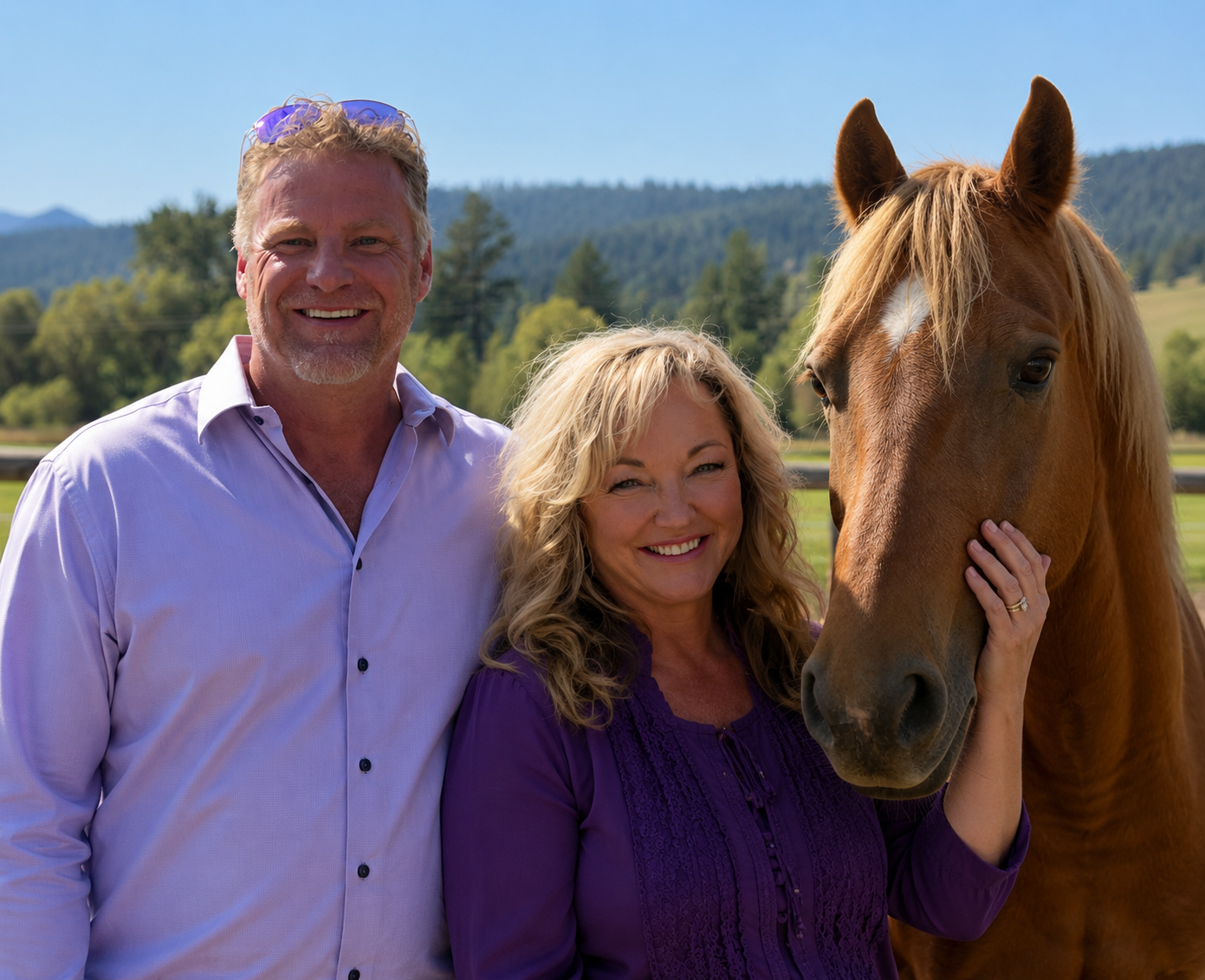
    Their ministry outreach includes their discipleship program, Angels in the Arena, an experiential ministry utilizing horses, teamwork, and Holy Spirit-led demonstrations to help people encounter healing, trust, identity, peace, and restoration in a tangible way as imitators of Christ. The ministry also equips and trains others to carry this message into communities, churches, and arenas around the world.

    Their mission is rooted in unity. Ephesians 4:3 calls believers to maintain “the unity of the Spirit in the bond of peace,” while Jesus prayed in John 17 that His followers would become one. Tracy and Bobby believe the Church is called to stand together for the hurting, the widows, the fatherless, and all those searching for truth and hope.

    Through books, ministry events, prayer, discipleship, outreach, and experiential training, they are inviting people everywhere to rediscover God’s truth and learn to “Master My Belief.” Bobby’s new book, Arise, now available on Amazon, encourages believers to rise up in faith, healing, identity, and purpose.

    The message ultimately comes down to the words Jesus spoke in Mark 5: “Do not be afraid; just believe.” Faith has the power to restore broken lives, renew hearts, and unite people together in God’s love and purpose.

    To connect, receive prayer, or begin the journey, visit Sowing to Live Ministries and click the “Let Us Pray For You” button. Whether you are hurting, rebuilding, or searching for truth, Tracy and Bobby invite you to join the movement and experience healing, restoration, and hope through Christ.


    Tracy Boone -Giblaint
    Grief and Trauma Advocate
    Bobby Giblaint and Tracy Boone-Giblaint are founders of Sowing to Live Ministries and Elijah’s Path to Healing Foundation, faith-based ministries dedicated to helping people heal, grow, and become imitators of Christ through discipleship, experiential ministry, and community outreach. Through their books, speaking events, and the Angels in the Arena discipleship program, they combine biblical teaching, personal testimony, and Holy Spirit-led equestrian experiences to help individuals restore peace, trust, identity, and purpose. Together, they are leading a growing movement focused on uniting the Body of Christ, strengthening families and communities, and bringing hope to those searching for healing, transformation, and truth. 303-570-6939 tboone@elijahspath.com http://www.sowingtolive.orghttps://docs.google.com/document/d/1-dGpmkWYbdyZte0c5CzbvQ3k3hR0pooiO5u09SXMG3g/edit?tab=t.0

    Published: 05-28-2026

  • The Responsible Life Trap: You Followed All the Rules. So Why Doesn’t Your Life Fit You?

    The Responsible Life Trap: You Followed All the Rules. So Why Doesn’t Your Life Fit You?

    By J. Lumen

    There’s a set of invisible life rules many people strive to live by: be responsible, make practical choices, think ahead, put others’ needs first, don’t be selfish or greedy.

    Years later, many are stunned to find themselves in a life that feels off.

    And not because they were reckless.

    They look at the life they’ve built and think, “I followed all the rules. I did what I was supposed to do to be successful and happy. I made the decisions that got me here… so why doesn’t this feel like the life I imagined?”

    Here’s the truth most people never learn:
    You thought you were building a life you would love by being meticulous, not irresponsible. But responsibility, when practiced to the exclusion of your own wants, desires, and dreams, quietly builds a life that doesn’t fit you.

    This is the Responsible Life Trap, and it’s far more common than anyone admits.

    The Trap You Never Saw Coming

    No one consciously chooses a life that feels off.
    No one enters adulthood planning to build a life that looks good on paper but feels like wearing the wrong pair of shoes.

    What they do instead is make a series of reasonable decisions:

    “Be practical.”
    “Choose stability.”
    “Don’t be selfish.”
    “Take the safe route.”
    “Be grateful for what you have.” (Spoiler alert, you don’t.)

    Each decision, on its own, makes sense.
    Each one feels responsible.
    Each decision earns approval, avoids conflict or judgment, and creates the illusion of keeping life under control.

    But over time, something subtle happens:

    When you consistently eliminate yourself from your decisions, you quietly build a life without you in it.

    Not because you lack confidence or are a pushover.
    But because you were taught, directly or indirectly, to treat what you want as secondary. Optional. Or worse, wrong.

    Eventually, this becomes your default. Your automatic decision‑making pattern.
    You move through the world as a capable, responsible adult, while simultaneously erasing pieces of yourself until you’re barely factored into your own life.

    Why Good Decisions Can Build the Wrong Life

    Many of us believe our life is the sum of our decisions.
    But that’s only half the equation.

    The other half — the part almost no one examines — is the decision‑making model being used at the time.

    A decision‑making model is a set of rules and assumptions you use, often unconsciously, to choose what to do.

    Many people are operating from:

    • inherited rules
    • unconfirmed assumptions
    • fear of disappointing others
    • imagined consequences
    • cultural expectations
    • outdated versions of themselves

    For example:

    “I’d rather have lunch to myself, but I have to eat with my coworker or they’ll be disappointed.”  Do you actually know that or are you predicting their feelings without any real evidence?

    This is what we’re taught to believe is “being responsible,” so we don’t consciously question the forces driving our decisions. It feels like we’re doing the right thing.

    But the model is unintentionally flawed.

    This way of deciding is designed to reduce risk, not to create a life that fits you.
    It prioritizes stability over desire.
    It keeps you acceptable by societal or cultural standards, even if it’s inauthentic to who you are at the core.

    So good, responsible decisions lead to one predictable outcome:

    A life that looks fine from the outside — the definition of success — but feels off when you’re the one living it.

    The Cost of Misinterpretation

    Here’s the part that matters most:

    When you focus solely on the belief that you chose your way into a life that doesn’t feel quite right, you’re likely to look inward and see yourself as the problem.
    I did this. I built this. So why am I not satisfied?

    Many people misread “this isn’t working for me” as “this is my fault.”

    They assume the sense that something is off is a reflection of them, rather than the way they were taught to make decisions.

    That misinterpretation is the real trap.

    But the truth is simpler and far more dignifying:

    The issue isn’t that you made decisions.
    It’s that you were using a decision‑making model built for safety and stability, not for a life that includes what you want.

    You weren’t building a life that included you.
    You were building one that met expectations.

    And you didn’t know there was an alternative.


    A Different Way to Decide

    You don’t need to burn your life down.
    You don’t need to start over or reinvent everything.

    What changes things is far simpler:
    you begin including yourself in the process.

    Start with four questions:

    What do I actually want? 
    Not what’s practical. Not what sounds reasonable. What do I actually want?

    What do I assume I’m not allowed to want — or even admit out loud? 
    This is often where the real truth lives.

    What rule am I following that I never consciously chose? 
    Most of our “rules” are inherited, not selected.

    What interpretation am I treating as a fact that’s limiting my options? 
    “I can’t.”
    “I shouldn’t.”
    “It’s too late.”
    “I could never.”
    “They would be so disappointed.”

    These feel like real, valid reasons — but they’re rarely examined and often unproven.

    When you start making decisions from clarity instead of fear, from capability instead of guilt, from self‑inclusion instead of self‑erasure, your life begins to shift in ways that feel immediate and unmistakable.

    Not because everything changes overnight.
    But because when you identify what you want first, you’re no longer negotiating your decision blindly, you’re negotiating honestly.

    Every decision involves trade‑offs.
    Including yourself doesn’t remove responsibility, it makes your decisions more accurate.
    You might even make the same choice you would have before, but the difference now is you’ve considered what you desire instead of leaving yourself out altogether.

    That’s how you stop excluding yourself from your own life.

    Flipping Your Switch

    If you recognize yourself in the Responsible Life Trap, odds are you’ve laid an amazing foundation to begin adjusting your life. It’s not wasted time or failure — it’s awareness.

    It means you’re shining light on the rules you’ve been living by and the decision model that was never built for the life you want to create.

    Once you see it, you can’t unsee it.

    You start noticing where you’ve been shrinking.
    Where you’ve been overly accommodating.
    When you’ve been ultra‑responsible but there was still room for you in the decision.
    Where you’ve interpreted your choices through someone else’s expectations or an assumption of their feelings.

    Nothing external has to change first — only your interpretation.
    And when that shifts, your options expand.

    Because people aren’t just making decisions that exclude themselves — they’re interpreting their lives in ways that limit their choices.

    Flipping the switch on how you interpret the parameters you’ve been using to make decisions changes how you see everything.
    Recognizing those interpretations aren’t fixed opens new possibilities.

    Because the life you want isn’t waiting for a different version of you.
    It’s waiting for a different interpretation.

    Your Move

    You followed all the rules, did everything right, and built a life that functions.
    Now it’s time to build one that includes you.

    And don’t push it off into the Neververse of Someday either.
    Because waiting for the right time is exactly how you keep quietly disappearing from your own life.


    J. Lumen is a transformation strategist and creator of The Unknown Bucket List℠, a rational decision‑making philosophy that shows people how to include what they want in their choices so they can live without regret – without abandoning responsibility, needing more time or money, or waiting for the “right time.” She brings clarity to the invisible influences shaping people’s choices and reveals the possibilities that open when those patterns shift. Connect with her at info@theunknownbucketlist.com, on LinkedIn at linkedin.com/in/jlumen8 or at j-lumen.lovable.app

  • When Success Becomes a Cage: How Entrepreneurs Reclaim Freedom, Harmony, and Joy in Business

    When Success Becomes a Cage: How Entrepreneurs Reclaim Freedom, Harmony, and Joy in Business

    By Regina Huber

    Many entrepreneurs start with a simple intention: freedom. Freedom of time, freedom of choice, freedom to design a life on their own terms instead of living inside someone else’s structure.

    But somewhere along the way, that intention gets replaced: more clients, more responsibility, faster growth, and more pressure to maintain what was built.

    And slowly, almost imperceptibly, the business that was meant to create freedom starts to demand everything. Long hours become normal, boundaries blur, and personal needs get postponed “until things calm down.” Enthusiastic creativity becomes output under pressure. And even when success is present on the outside, something essential begins to fade on the inside: joy.

    And then comes the uncomfortable realization: “I built this… and I don’t feel free in it anymore.”

    The paradox of entrepreneurial success

    Most entrepreneurs don’t lose themselves because something goes wrong. They lose themselves because things go right.

    The business grows. Fame does, too. The income increases. And with that growth comes an invisible expansion of responsibility that often goes unexamined. At first, it feels like dedication or discipline. Over time, a choice becomes a heavy necessity. Because now, the structure of the business dictates the structure of the life around it.

    Many business owners don’t notice the shift until they reach a point where enthusiasm has flattened. The spark is still there, but harder to access… because it’s surrounded by dullness. Work continues, but without the same sense of aliveness that once made it fun.

    This is not burnout in the dramatic sense. It’s something more subtle: disconnection from self inside success.

    When the business expands, but the self contracts

    There is a particular tension many entrepreneurs recognize but rarely articulate.

    On paper, things are working. But internally, something’s missing.

    Less presence. Less ease. Less room to feel like a human being beyond the role of “business owner.”

    The days become structured around output rather than alignment. Even time set aside for rest is often mentally occupied by what still needs to be done. And without noticing it, life becomes organized around the business instead of the business being in service of life.

    This is where the sense of freedom erodes.

    “How do I scale?” is not the only important question

    Another one is: “How do I stay connected to myself while I build?”

    Because without that connection, growth becomes heavier with every new level.

    What many entrepreneurs eventually crave is internal harmony. The ability to move through work without losing themselves in it. The capacity to make decisions without constant pressure. The experience of having space inside their own life again.

    Freedom, in this sense, is not about doing less or escaping responsibility. It’s about no longer being internally trapped inside the structures you created.

    Reclaiming freedom starts from within

    There is a shift that happens when an entrepreneur stops trying to fix the business first and starts paying attention to the inner experience of how they are building it.

    Because external change without internal alignment simply recreates the same pattern at a different scale.

    Real freedom begins with awareness:

    • Where are you operating from obligation instead of choice?
    • Where has expansion come at the cost of your presence?
    • Where are you still moving forward, but no longer feeling connected to yourself?

    These questions may not sound strategic; but they are essential for your wellbeing… and that of your business, which is an extension of you.

    They reveal whether your current structure is supporting your life or slowly replacing it.

    A different way of building: Live Fully

    Reclaiming freedom does not require abandoning what you’ve built. It requires rebuilding your relationship to it.

    This is where conscious self-leadership becomes essential: the ability to lead not only your business, but your internal state while you do it.

    A simple framework I use with clients is what I call Live Fully: The A-Life Method.

    It is not a productivity system. It is a way of realigning how you operate from the inside out.

    Freedom is not outside your business. It is inside your structure.

    Many entrepreneurs keep searching for freedom as if it exists beyond their current setup. But in reality, freedom is not something you eventually reach after enough success.

    It is something you either build into your business from the beginning or gradually rebuild into it once you realize it’s missing.

    The shift is subtle, but profound: from “How do I make this work?” to “How do I make this feel aligned while it works?”

    Because a business can be highly successful and still cost too much of the person running it. And success that comes at the expense of freedom, harmony, and joy is not the final destination many thought it would be.

    The invitation

    If your life looks successful but doesn’t consistently feel like it belongs to you anymore, the question is not what to add.

    It is what to realign.

    Freedom, harmony, and joy are not outcomes you earn after enough effort.

    They are conditions you can rebuild into how you live and lead – starting from the inside. And when that shift happens, the business stops being a structure you have to endure and becomes something that finally moves with you again.


    Regina Huber
    Freedom-First Leadership Coach, Speaker, Author, Podcast Host, and CEO of Transform Your Performance
    http://www.transformyourperformance.com
    regina@transformyourperformance.com

  • SMART TECHNOLOGY – HUMAN TOUCH

    SMART TECHNOLOGY – HUMAN TOUCH

    By Steve Higginbotham (Steve Higgy)

    TALENT ACQUISITION & OPTIMIZATION: WHAT WE GET WRONG AND HOW TO MAKE IT BETTER

    I started in this industry back when we had the Yellow Pages and carried a beeper. I felt like things got revolutionized when I got my first cell phone and when I stopped receiving faxed resumes. Monster came up and I had free resumes at my fingertips. That was just the beginning of it. You look now and there’s LinkedIn and AI software that can parse through resumes and navigate those choppy waters. And now, we’re on smartphones and can apply to jobs on our phone versus a computer. In the 27 years, I’ve seen a few major shifts and changes. Same thing with the way in which we recruit.

    Nowadays, I feel like it’s not as humanized as it could be. People hire people that they trust, like, and respect. They don’t hire resumes. It’s great to automate, but there’s still a person at the other side of that resume. So, it has to have a humanized approach. And I feel that’s where people and companies get it wrong. They are moving so fast, they forget about the human touch.

    When I look at the recruitment industry, there’s some things that are done really well, and other things that are done really poorly. Having a good talent acquisition team can make a difference. And it’s not just going through quick resumes or having the interview, but it’s everything — making sure that interviewers and candidates are truly engaged. Candidate engagement refers to the ongoing process of building meaningful communication with job seekers throughout the recruitment journey. It’s not just about sending resumes or updates — it’s about creating a connection that keeps candidates interested, informed, and aligned with your company’s values and culture. And that’s the difference between candidates and applicants. The human connection. And now, that’s also moved into the candidate experience, not just once they get hired, but how they move through their journey within a company. That’s how I look at my role and what I’ve done over the years.

    First and foremost, job descriptions that a lot of companies write are either archaic or not specific enough. They’re a little too generic and too open. I’ll give you one example, and part of this is based on compliance. People know that they might want someone with five years of experience, so they’ll put three plus years of experience. So, it opens up the candidate pool a little too wide. You’ll get people with two or three years, and then you’ll get people with 20 years. And it doesn’t mean that you wouldn’t hire someone with 20 years of experience, but let’s narrow down a little bit. No longer are the days where they put five to seven years. And again, they shouldn’t because someone with eight years might be very well qualified for that job. You don’t know until you interview them. The second thing they do is they give tasks to the wrong person, meaning that they have a coordinator who is overworked, probably underpaid, and doesn’t have the time to sift through the quality resumes. And again, how can you tell a person from their resume? Some resumes are one page, some are two.

    The hard thing is when people look at resumes, they tend to look for what candidates don’t have. What are they missing? This is standard human bias. AI and assessments could help companies predict better qualified candidates if they could focus more on the hiring practice versus their time to fill metrics. We don’t have time to screen 20 candidates. We only want to shortlist the top five or seven. And then we give that to our managers and they narrow down even further.

    So, that’s where AI comes in now — can it help sift through the rubbish and get the better qualified candidates? Well, if we don’t have the best job description and we don’t know what that means, how do we know where we’re going? I think the greater part of it is when a recruiter and a hiring manager do not have that connection. I’ll give you an example. Some companies hire the same person month after month. Maybe it’s a maintenance mechanic or manufacturing technician. There’s heavy turnover, there’s high volume, and we think we have the perfect job description. We’re going to send it out, and we just get the same people, and we’re praying a little bit.

    Basically, it’s a posting and coasting method that we’re using to get a candidate. But we really don’t know. Every time we put someone in that group, the culture shifts just a little bit, good or bad. And we’re not necessarily in tune or engaged with that because we’re worried about the production and keeping the line moving. If we can get that intake call a little bit tighter and more narrowed down when we’re screening and interviewing candidates, we can choose someone that may be more retainable.


    Steve Higginbotham — known as Steve Higgy — is a Talent Acquisition strategist, speaker, and mentor focused on helping leaders and professionals move with clarity and confidence.

    He brings deep expertise in talent strategy, career progression, and execution discipline — guiding individuals and organizations through complex challenges, as a Hands-on Project Manager, with practical structure and intentional action.

    http://www.hipo.services