Category: Health and Wellness

  • Your Face Is Not the Problem

    Your Face Is Not the Problem

    She came to me for face exercises.

    She was polished, successful, put-together — and somewhere behind her eyes, completely lost. She didn’t need face exercises. She needed someone to finally see her. The real her. The one she had buried underneath years of achievement, discipline, and doing everything right.

    I recognized her immediately. Because I was her once.

    For twenty-two years I trained my body to perform as an elite athlete. I knew how to override pain, ignore signals, and keep going long after something inside me was asking me to stop. From the outside, that looked like strength. From the inside, I was learning how to leave myself.

    What I didn’t know then is that the body keeps score of everything. Every time we silence our truth, it shows up somewhere. In the jaw. In the throat. In eyes that stopped shining. And eventually — in the mirror.

    We call it aging. But very often, it is unlived truth.

    This is what I have learned working with over 10,000 people across the world: the face is not the problem. It is the messenger. It shows where the jaw is holding back anger, where the throat is tight with words never spoken, where the smile became a mask instead of a truth.

    And here is what most people don’t know: that mask can be removed. Not with surgery. Not with fillers. But by going back into the body and releasing what was never yours to carry.

    This is the foundation of yoga4face® — the method I developed after years of personal loss, reinvention, and rebuilding. It combines precise facial training with embodiment, breathwork, and voice work. Not to make women look younger. To help them feel real again.

    Because when a woman finally releases what she has been holding — the grief, the shame, the years of performed okayness — her face changes. Not because we targeted the muscles. Because the truth came through.

    One client walked into a family gathering after our work together. Everyone turned to look. Not because she had changed her face. Because she had finally arrived in it.

    That is what I call the Smile Code. Your smile is not decoration. It is a signal — that your body, your heart, and your truth are beginning to speak the same language again. It is your key.

    My book, launching September 2025, goes deep into this work. Until then, you can begin with my free 4 Magic Moves practice — four short exercises to bring you back into your body whenever you feel stuck, disconnected, or lost.

    Every Sunday, I also open the “Back2Paradise” space — Your Smile Is Your Key — a live show where we return together. To the body. To the truth. To the real smile.

    Your face is not the problem. And you are not too late.

    Begin at reneeambarees.com


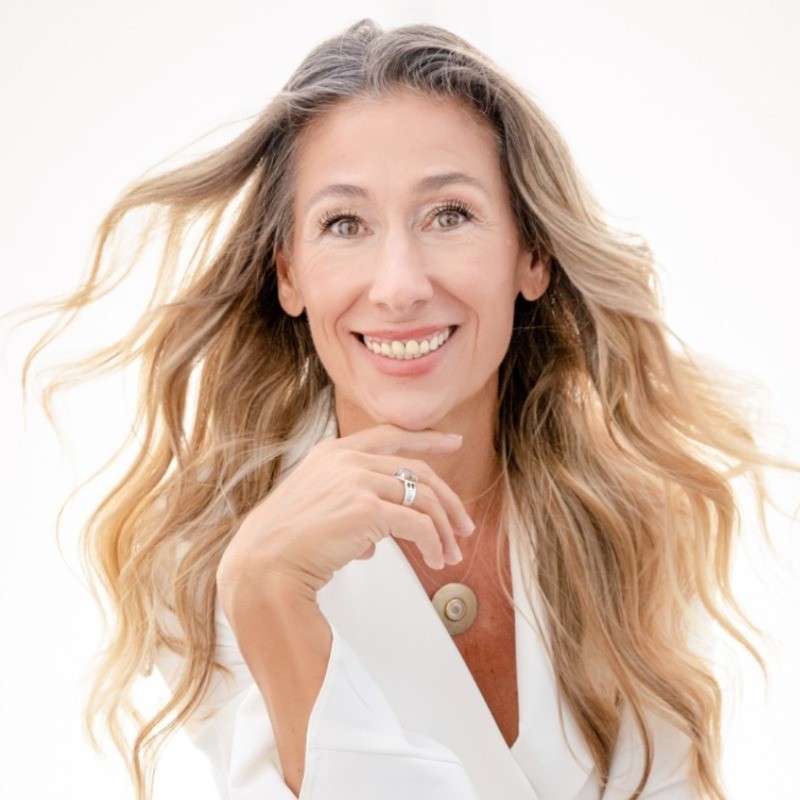
    Renée Ambarees is the founder of yoga4face®, international bestselling author, keynote speaker, and creator of the Smile Revolution. Across five decades of lived experience — as an elite athlete, corporate professional, and embodiment guide — she has dedicated her life to understanding the connection between body, mind, and soul. Gifted from an early age with heightened intuition and healing presence, she has worked with more than 10,000 clients worldwide, guiding women back into their bodies, their truth, and their real smile.

    Her book, The Smile Code, launches September 2025.
    Website: reneeambarees.com
    Back2Paradise Show (every Sunday): youtube.com/@reneeisermannyoga4face
    LinkedIn: linkedin.com/in/renée-isermann
    Facebook: facebook.com/renee.isermann.92

  • The Thousand Small Surrenders or one big awakening

    The Thousand Small Surrenders or one big awakening

    Written by Jyothi Devarakonda

    Nobody warns you that it’s not the big things that dim you. It’s the quiet, daily adjustments you stopped noticing you were making that starts to change us !!

    Maya and Aks had finally made it. After a decade of syncing Google Calendars with the precision of a NASA moon landing and negotiating school pickups like seasoned UN diplomats, they had carved out a full week for themselves. The kids were at their grandparents’ farm, presumably engaged in mud-based warfare and eating their weight in unwashed berries. For the first time in years, the air was silent.This was the trip. Twenty years in the making. A quiet beach. A balcony overlooking endless blue. No alarms, no one yelling “Mum!” every seven minutes.  That first evening, Maya sat outside watching the sky melt into gold. Everything looked exactly as she’d imagined, and yet, she found herself waiting for the rush—that cinematic this-is-it feeling.

    It never arrived.

    She found herself waiting. For the rush. That this-is-it feeling she’d assumed would simply arrive.

    It didn’t.

    Her mind wandered instead. Groceries. A forgotten email. A work deliverable her manager had quietly absorbed — she’d smiled with relief and moved on. Why am I thinking about work here? She glanced at Aks. Deeply, almost suspiciously calm. No spontaneous ideas, no ridiculous jokes. Just comfortable. Like a man who’d finally found the off switch to his brain and wasn’t going anywhere near it again.

    The next afternoon, a line in a book stopped her:

    “The comfort of routine can often disguise the exhaustion of monotony.”

    It described something she hadn’t had a name for — and then gave her one. Silent burnout. Not the dramatic kind — no breakdown, no crisis, no moment you can point to and say that’s when it happened. The quiet kind. Built through a thousand small compressions. Every frustration absorbed without complaint. Every time you adjusted your expectations rather than addressed the problem. Every time you made peace with less, so automatically that less started to feel like enough. Suddenly  even when your wish comes true, even then you don’t feel the same high that you thought you would. 

    Modern research has mapped what this does to the body. Chronic low-level stress dysregulates cortisol — which in healthy rhythm works alongside dopamine, serotonin, and oxytocin, the chemicals behind drive, warmth, and connection. When stress is constant but undramatic, the system doesn’t spike. It flattens.   

    That evening, as the sun began its descent, Maya decided to poke the bear.

    “Aks,” she said, her voice cutting through the sound of the waves. “Do you feel like something’s missing?”

    Aks didn’t flinch. He didn’t deflect. He didn’t even do that thing where he pretends he didn’t hear her so he can finish his beer. He just looked up, and for the first time in days, Maya saw his eyes actually focus on her.

    “Yeah,” he said quietly. “I’ve been sitting with that all day.”

    “I thought this was the goal,” Maya said, her voice trembling slightly. “No chaos. Just peace. But I don’t feel peace. I feel flat. Like a soda that’s been left open for too long.”

    She looked at him, searching for the man who used to argue about philosophy until 3:00 AM. “Do you feel it at work, too?”

    Aks leaned back, the wicker chair groaning under the weight of his honesty. “I stopped chasing things, Maya. Projects I would have fought for, ideas I thought were brilliant… I just let them go. I told myself it was ‘maturity.’ I told myself I was being ‘reasonable.’ But looking at this ocean today, I realized I didn’t become a Zen Master. I just stopped expecting things to work out. I’ve been quietly shrinking, and I’ve been calling it ‘coping.’”

    “And I’ve been calling it ‘patience,’” Maya added. I thought i have become mature and am in acceptance and bliss, Now i wonder if that was the case why is my body signalling back with back pains, acidity and other annoying and nagging form of discomforts ??

    The silence that followed wasn’t the empty silence of the day before; it was heavy and honest. They realized that their bodies had been sending them “system error” messages for years. The 3:00 AM acidity Maya treated with antacids? That was the body’s protest against a life she was swallowing. The recurring headaches Aks blamed on the weather? The fatigue they both blamed on “getting older”?

    It wasn’t aging. It was the accumulated cost of surrenders they never stopped to count. They had been treating their symptoms like spam emails, hitting “Delete” before they could even read the subject line.

    In that moment, an old concept from Ayurveda—the ancient Indian system of medicine—came to Maya’s mind. Ayurveda suggests that health isn’t just the absence of disease; it’s the presence of Ojas, or vital energy. When we live out of alignment, our Pitta (drive) burns us out, or our Kapha (stability) turns into stagnation. The cure wasn’t a pharmaceutical intervention; it was “living in the body again.” It was laughter that hurt your ribs. It was genuine, messy connection.

    “I don’t want to be ‘reasonable’ anymore,” Aks said, a small, lopsided grin finally breaking through his mask of calm. “I think I’d rather be a little bit unreasonable and actually feel something.”

    He reached over and took her hand. His palm was a little sweaty, and his grip was a little too tight, but it was there. It was an invitation.

    They didn’t solve twenty years of “fine” in one night. There was no magical transformation into twenty-somethings. But the “Delete” button was finally broken. They sat on that balcony and, for the first time in a long time, they didn’t just manage the silence. They lived in it.

    The body was never asking to be managed. It was asking to be heard. And as the stars came out over the Mediterranean, Maya and Aks finally started listening.


    Jyothi Devarakonda
    Certified Advisor · Leader · Life & Transition Coach · Founder, Guiding Eagle Inc

    ICF Accreditation Candidate · 2026

    Jyothi didn’t start her journey as a coach — she started by navigating change herself. From leading interior design projects to building a 20+ year career in banking and financial advisory, and then starting over as an immigrant in Canada, she knows firsthand what it means to rebuild from the inside out.

    As a certified advisor and leader, she brings both professional rigour and lived experience to her work. Currently completing her ICF accreditation — the gold standard in coaching credentials — she works at the intersection of personal transformation and practical strategy, helping individuals move from self-doubt and survival mode into clarity, confidence, and a life they have consciously chosen.

    Along the way, she noticed something that kept showing up: no matter how successful someone looked on the outside, misalignment in even one area of life quietly dimmed everything else. That insight led her to create Guiding Eagle — where she now helps individuals, especially women in transition, step into the fullest, most aligned version of themselves.

    Her work is built on aligning four core pillars — space, finance, career, and relationships — because she believes lasting transformation happens when both inner confidence and outer circumstances shift together. Through coaching, workshops, and digital programs, she helps people build lives and help people identify their decision making and acceptance patterns which impacts all areas of our happiness.
    Connect with Jyothi –
    https://www.guidingeagle.com ; Tel # 587-741-3737

    Book a call to start your journey – https://calendar.app.google/UREtBNj6gvFDSGeU8

    “When (Jnana) True knowledge guides us, (Dharma) True purpose grounds us , and (Karma) our conscious action follows- life begins to align.

  • The Story of Health

    The Story of Health

    Wes þu, hal, freond!

     That’s ‘Hello, friend’ in Old English. Anglo-Saxon. The language that English began as when it branched away from Proto-Germanic near to 2,000 years ago. It is the foundation upon which our modern language is based, without all the Norman French and Latin mixed in. That comes centuries later.

     Many of the words from Old English survived through to the modern day, most of them changed in some ways. Some of the words survived in their original form, and even perhaps close to their original pronunciation.

     Health is one such word. Wealth is another.

     Before getting to that story, a few interesting things about the Anglo-Saxon people:

    • Like nearly all human societies, the Anglo-Saxons had storytellers, known as scops (sounds like shopes), their version of bards
    • There was something of a belief that, according to Hana Videen, ‘each Word carries a
      story, an entire history of thought’.
    • The word ‘Word’ could have multiple meanings, including “Story’, ‘Word’, or ‘Speech’.
      We still use those meanings today in different contexts.

     With that in mind, there is the word ‘Health’. The suffix on the end of the word, -th (which is this symbol in Old English Þ), means ‘state of’ or ‘condition of’. The first part, heal, means wholeness. Therefore, Health means ‘state of wholeness’ in this old sense. The modern definition is fairly complete, but is not quite the same meaning: ‘a state of complete physical, mental, and social well-being, not merely the absence of disease or infirmity.’ (W.H.O. definition). For one, it uses state of well-being which is actually the Old English definition of Wealth.

    The old definition in Merriam Webster used to be: Health – a state of wholeness in which all the organs of the body function together at 100%, 100% of the time.

     There is no mention of sickness or disease for this definition, and it contains, at the beginning, the original ancient meaning of the word. Second, it defines health as 100% parts, with 100% function. Health is often compared as not being symptomatic, or not feeling sick. Really, it is a state where there are cycles of Ease and Dis-Ease. And Health is present when there are symptoms of feedback and when there are not.

     The limit here is keeping it purely in the body. Purely physical. In the original meaning, Health simply is a state of wholeness.

     With the Merriam Webster can be added parts and function at 100%, each. With the W.H.O., different aspects of life than simply the physical. This is the story of health and how it has grown. This is the history of thought behind the word.

     Health, that is, Wholeness, then is in all aspects of life. In Old English, it was a deeper word. In modern English, it has depth, but requires more explanation to encompass all it really affects.

     Health is whole being physically, with the all the organs (Parts) present and with 100% function keeping them in co-ordination. In chiropractic, it is recognized as the parts of the body being kept in coordinated harmony to adapt to the environment and controlled by signals sent from and received by the brain, adjusted in the spine as necessary to keep the communication and connection free.

     Health is present spiritually – to have a healthy spiritual pursuit. Whether in an organized faith, or a private path, there are parts that function a certain way for each individual and group in coordinated harmony.

     Health is present in mental learning and understanding – parts of learning, the books, knowledge, pursuits, with certain organizational systems for each individual to utilize however needed.

     Business wants a healthy bottom line. Corporation comes from the Latin meaning ‘being in a state of a body’. Corporations and small businesses to solopreneurs have parts in the business, with function. Employees look for healthy work environments in healthy companies with healthy pay.

    Healthy financial situations. Parts are accounts. Function is how they behave to achieve financial objectives.

     Healthy social life – clubs, teams, organizations. Leadership roles.

     And also Healthy relationships. Each relationship in life has parts – individuals – involved, with certain function. Whether it be parent-child, spousal, friends, or siblings. Even pets.

     Each of these aspects of Health involves Wholeness. Each aspect involves communication and connection for the function between the parts. Putting all seven of these parts of life together in coordinated harmony, with cycles of Ease and Dis-Ease, is the story of Health, Wholeness.

     From its ancient roots to today, the word Health continues to evolve and influence the lives of the English-speaking world in all its various forms.

     Sien gesunde.


    Dr. Kyle Hulsebus is the Storyteller of Health and Human Potential.

    He is an international speaker, writer, educator, and active 3rd generation chiropractor in his family’s practice in Northern Illinois. He is a specialist in the realm of Health and Well-Being, both physically working with the human body and spine, and spiritually and mentally through speaking, educating, and consulting.

    He speaks to corporations, groups, and schools on topics of Health and Human Potential. Dr. Kyle takes his background in studying multiple disciplines – including dance, theatre, healthcare, writing, sciences, philosophy, and spiritual traditions – to relate concepts in multiple ways for individuals from all walks of life. He does workshops in tandem with his wife, Dr. Shanti Hulsebus, who is also a chiropractor and master of healing arts.

    He is dedicated to educating and empowering others in their health and potential in all areas of life through his stories, articles, and talks in order to shift the paradigm of health from without to within.

    His latest project is The 40 Over 40 – a collection of video tips for empowering health in all areas of life after 40 years of age.
    He can be found at drkylehulsebus.com and 40over40.com. His chiropractic office can be found at mphulsebus.com.

  • Following the Call: A Journey of Faith, Healing, and Raising Consciousness Across America

    Following the Call: A Journey of Faith, Healing, and Raising Consciousness Across America

    Written by LindaJoy Benn

    There comes a moment in life when you can no longer ignore the quiet voice within. Not the voice of logic, planning, or control… But the deeper knowing — the one that calls you forward without a map. For me, that moment wasn’t a single decision. It has been a lifelong journey of learning to trust, to surrender, and to follow where I am guided — even when it doesn’t make sense.

    Today, that path has led me across the United States.

    No fixed plan. No certainty of where I will be from one week to the next. Simply a deep trust that I am being guided exactly where I need to be, to meet the people I am meant to meet, and to share the work I am here to bring into the world.

    This is what I call living in faith and for me, this is God’s work.

    A Life Shaped by Challenge — and Transformation

    My journey into healing and consciousness work was not something I chose lightly. It was born through deep personal challenge, emotional pain, and a profound search for meaning.

    At a young age, I experienced feelings of rejection, abandonment, and disconnection that shaped my early years. Like many, I searched externally for answers — through relationships, travel, and experiences — yet something deeper remained unresolved.

    At 21, I was diagnosed with cancer. That moment became a turning point. Rather than accepting a path of fear, I chose to explore a different way — one that led me into the world of energy, consciousness, and the deeper connection between the mind, body, and spirit.

    Through this journey, I came to understand that what we experience physically is often a reflection of deeper emotional and energetic patterns.

    And more importantly — that transformation is possible.

    Over 30 Years of Deep Healing Work

    What began as a personal healing journey evolved into over three decades of professional practice.

    I have studied and trained extensively across multiple modalities, including bodywork, energy healing, subconscious reprogramming, and personal development. I’ve worked with thousands of clients, helping them move through burnout, illness, emotional trauma, and life transitions.

    Early in my career, I became known as the person people would turn to when they were overwhelmed, stressed, or at breaking point — even within corporate environments. But my work has always gone beyond stress relief. It has been about addressing the root cause — helping people reconnect with themselves, shift their awareness, and access a deeper level of healing and clarity.

    Over time, I was introduced to Pellowah — a powerful energy healing modality that would become a core part of my work.

    The Power of Pellowah

    I trained directly with the founder of Pellowah in 2004, when the modality was first channeled, as part of the initial group of teachers. Since then, I have been teaching Pellowah internationally and was one of the first to bring it to the United States in 2005.

    Pellowah is often described as a “radical shift in consciousness” but what I have witnessed over the years goes beyond words. It supports individuals in releasing deep energetic blocks, expanding awareness, and accessing new levels of clarity, alignment, and personal power.

    For many, it feels like a reset at a fundamental level — allowing life to reorganize in a more natural, aligned way.

    This is why I continue to share it. Not as something to “fix” people — But as a tool to empower them.

    A Mission Greater Than the Individual

    We are living in a time of global change. More people than ever are questioning their lives, their purpose, and the way they have been living.

    What I see every day is not breakdown — It is awakening.

    My mission is to support this shift. To help raise the energetic vibration of the planet by guiding individuals back to themselves — to their truth, their clarity, and their inner knowing.

    Because when one person shifts, it impacts everything around them, and when enough people shift…

    We change the world.

    Following the Call Across America

    This is what has brought me to the United States once again, not with a rigid plan or fixed schedule — But with a willingness to follow where I am guided.

    Some days I know exactly where I am going. Other days, I don’t know where I will be sleeping, and yet, everything continues to unfold with ease.

    The right people appear. The right opportunities open. The right conversations happen.

    This is what happens when you trust.

    An Invitation

    As I travel, I am connecting with communities, practitioners, and individuals who feel ready for something deeper.

    I offer experiences, workshops, and training in Pellowah for those who are called to explore this work — whether for personal transformation or as a modality to support others.

    This is not about convincing anyone.It is about resonance.

    If something within you feels activated reading this… That is where your journey begins.

    Living in Trust

    I don’t have all the answers, but I do have trust.

    Trust in the path. Trust in the work. Trust in the people I am here to meet.

    And above all, trust that when we follow what we are guided to do — even when it feels uncertain — we are always supported, because sometimes the greatest transformation doesn’t come from knowing the plan…

    It comes from having the courage to take the next step anyway.


    LindaJoy Benn is an international healer, trainer, and transformational guide with over 30 years of experience in the natural health and energy space, beginning her healing journey in 1990. She trained directly with the founder of Pellowah in 2004 as part of the first group of teachers and has since shared this powerful modality globally, including introducing it to the United States in 2005.

    LindaJoy specializes in supporting individuals and practitioners to shift at the root level — expanding awareness, restoring energy, and reconnecting with their true self. She is currently traveling across the U.S., following her inner guidance to connect with communities and raise consciousness through live experiences, workshops, and training.

    http://www.lindabenn.com
    https://www.linkedin.com/in/lindabenn/
    linda@lindabenn.com

    Published: 04-27-2026


  • Poetry and Positive Psychology

    Poetry and Positive Psychology

    Written by Michael Teferi

    The written word, specifically as it related to the art of poetry has existed for many generations.  My high school, for example, gave me a wonderful version of reality back in 1996, when my classmates and I were taught by our English teacher about the classic and modern poetry authors of the past and present, in addition to the unique Poet Laureates.  Persons, such as Robert Frost, Maya Angelou, Langston Hughes, and our youngest Poet Laureate, Amanda Gorman, swayed victorious against their proclivities and brought wisdom of the ages through their words and deeds.

    Positive Psychology on the other hand, is the scientific stop helping people thrive via human flourishing.  Wonderful ideas such as meaning, purpose, inspiration, character strengths, growth mindset, meditation, happiness, and social anxiety have developed and grown into true science and neuroscience books and scientific studies that resonate with the human condition.  Most importantly, Psychologists have found that people tend to associate themselves with different types of connections when they experience opportunities for learning new things, especially from a particular environment from a standpoint of understanding neuroplasticity.

    Fortunately, there exists qualified evidence from Professors, Authors, and Psychologists that provide amazing details of action.  Professors such as Todd Kashdan, Ph.D., Professor of Psychology at George Mason University’s Well-Being Laboratory, provide evidential bases for understanding and applying facts and support for scientific theories and methods that help people showcase ideas in the realm of Character Strengths, Social Anxiety, and Curiosity, which give credence and credibility to their work as students across the field of Psychology, especially Positive Psychology, entail opportunities for experiential learning on purpose.

    My own experiences have shown me that as a graduate of George Mason University after having been inducted into Psi Chi-The International Honor Society of Psychology and The Honor Society of Phi Kappa Phi thereafter in March 2012 and April 2012, respectively, and then experiencing the tribute of achieving the Bachelor’s degree of Psychology in May 2012, it is with tremendous pleasure and privilege that such contributions to the field of education provide quality over quantity, strength of conviction, and love for pure, unadulterated wisdom can easily be attributed to why people do what the do and how much you can learn from courses such as The Science of Well-Being/Character Strengths from Todd Kashdan, Ph.D., Psychological Fitness from Dr. Jerome Short, Ph.D.,, and Cross-Cultural Psychology from Eric Shiraev, Ph.D., showcase how we are using processes and practices to improve the way people see themselves in everyday situations that allow others to be better than they can possibly imagine.


    My name is Michael Teferi, I am a BIPOC Poet, Writer, Positive Psychology Coach, Debut Poetry Book Author, & Podcast Host. Please feel free to contact me by email at romanticsinger24@gmail.com, through my Author Website at https://michaelteferi.author-pages.com, and my free TextNow phone number at 571-500-8485.

  • Line In The Sand Risk

    Line In The Sand Risk

    Written by Matthew Melvin

    The Line in the Sand

    It was August 2015. I was doing 72 miles per hour on I-495 West in Haverhill, Massachusetts. And honestly, for me, that was slow. There were plenty of days I had pushed past 130.

    Then, in a single heartbeat, everything changed.

    A Lexus SUV crested an embankment to the east and came barreling across the lanes directly into my path. There was no time to think. No time to react. In that fraction of a second, with metal and glass and consequence rushing toward me, I felt something I had never allowed myself to feel before.

    I felt God.

    Not as a concept. Not as a Sunday morning ritual. As a force, real, present, and unmistakable, drawing a line in the sand.

    You choose. Right now. Your will or Mine.

    I knew exactly what my will had looked like. The lying. The cheating. The stealing. The revolving door of the prison system. I knew the road I had been on, and I knew where it ended. What I didn’t know yet, what I was about to discover, was that control had always been an illusion.

    God the Father is the only One who is truly in control. And in that moment of near-death clarity, I finally stopped fighting that truth.

    The Road Less Traveled

    Robert Frost wrote about two roads diverging in a wood. He chose the one less traveled and that, he said, made all the difference.

    I chose Jesus. And I went all in.

    That meant a complete 180. Not a slight course correction. Not a softer version of my old life with better habits bolted on. A full reversal. Because the road I had been traveling wasn’t just not working. It was destroying everything I claimed to love: my family, my freedom, my future.

    I was ready for drastic. I was ready for life-altering. I was tired of the man I had been.

    The Furnace

    A year after that crash, I was in prison for an offense that dated back to 2009. I spent the majority of my 16-month sentence in solitary confinement.

    Most people hear “solitary confinement” and picture suffering. And yes, it is hard in ways that are difficult to put into words. But what they don’t tell you is what can happen when a man is stripped of every distraction, every excuse, every noise he once used to drown out the voice of God.

    For me, solitary became a seminary.

    I went to every Bible study available to me. I sat and listened to volunteers from Jehovah’s Witnesses, Christian Science, and Scientology. Not because I agreed with all of it, but because I was hungry. Hungry for truth. Hungry for something real. Hungry to understand what I had been running from my entire life.

    And I built disciplines. Every single morning, I made my bed. A small act of order in a world that felt entirely out of my control. I fasted. I prayed. I read my Bible. I exercised. Day after day after day.

    Those disciplines didn’t just pass the time. They built the man I was becoming.

    Learning to Love the Man in the Mirror

    Somewhere in those walls, something extraordinary began to happen.

    I started to love myself.

    Not with arrogance. Not with the false bravado I had worn for years like armor. But with the quiet, settled
    peace of a man who had been found and who finally believed he was worth finding.

    I forgave myself. And I began to forgive others.

    I started working Bill’s 12 Steps, a framework most people associate with AA, but one that applies to any addiction, any compulsion, any place in life where you have handed your power over to something that is slowly killing you. The Steps didn’t make me weak. They made me honest. And honesty, it turns out, is the foundation everything else is built on.

    The Question I Ask Every Day

    I am a proud Christian man. That is not a title I wear lightly, and it is not a label I use to market myself or make myself look better. It is the core of who I am.

    Every single day, in every decision, every relationship, every business move, every conversation, I ask myself one question:

    Is this serving God, or is it
    serving me?

    That question has cost me things. It has required me to say no when my flesh screamed yes. It has slowed me down when I wanted to move fast and cut corners. But it has also built something I never had before:

    A life I am not ashamed of.

    A family I haven’t abandoned.

    A purpose that outlasts me.

    The crash on I-495 didn’t just nearly take my life. It gave it back to me. And this time, I’m doing something with it.


    When Matthew Melvin started working at a car dealership in South Burlington, Vermont, he never thought that one mistake would lead to a life-changing stint in prison. Feeling he wasn’t being paid his full commissions on car sales, he made an impulsive decision to get what he felt he was owed. He hatched a badly-thought out plot to steal a car, sell it as his own and keep the profits. However, a basic reference and background check quickly revealed that the vehicle’s title was not in his name, but still belonged to the dealership. He was arrested and sentenced to prison.

    While Matthew has taken responsibility for his poor life choices, he believes he has been treated unfairly due to his sexual orientation, religious and political affiliations, and his adult diagnosis of autism. While he and his lawyer argued that his punishment would be best served in a mental health facility, Matt was unfortunately sentenced to 18 months in prison to be served in general population.

    Terrified and alone, Matthew began his prison term with the best of intentions—to keep his head down and serve his time as uneventfully as possible. But being a gay, Christian, Trump supporter brought him unwanted and negative attention. He was bullied by cellmates, targeted by gangs and even raped in one facility. The months he was imprisoned felt like decades and there were times he doubted he would make it out alive.

    Bullied Behind Bars chronicles Matthew Melvin’s life feeling like an outcast, enduring a lonely and friendless childhood, and being punished for a crime that began with the honorable goal of him just trying to make a living.

  • The Expressions of Little Sunshine

    The Expressions of Little Sunshine

    By Tilda Tart Blue Butterfly Publications

    Facial expressions are often the very first thing we notice about someone—yet they can be one of the most difficult things to teach a child.

    Have you ever tried to teach someone the difference between a smile and a frown? I’m not talking about specialized training for the CIA, FBI, or military. I’m talking about something much closer to home—raising a child and helping them interpret the emotional world around them.

    When my “Little Sunshine” was young, I believed he was simply a happy child. He laughed at everything. Compared to my daughter, he seemed endlessly joyful. I thought that laughter meant happiness.

    I was wrong.

    By the age of three, we knew something wasn’t right. Our son had been removed from more daycare centers than I can count. I found myself taking more time off work to pick him up than I ever did for vacations. Yet at home, he was calm, loving, and gentle with our family. We couldn’t understand the disconnect.

    He had everything a child could need—a loving two-parent home, a sister, a house full of toys, and a dog he adored. Of all our pets, he especially loved Sally. So what was missing?

    Looking back, there were signs. He would hide frequently. He would run unexpectedly. At the time, we didn’t realize these behaviors pointed to something deeper.

    One daycare invited us in before ultimately dismissing him. They showed us a video of our son destroying property. We sat there in shock. We didn’t recognize the child on the screen.

    The director gently asked if we had ever heard of autism or Asperger’s. We hadn’t. The suggestion felt jarring—even offensive. Were they labeling our three-year-old as a behavioral problem?

    Still, they gave us a resource and asked us to read it.

    That night, we did—and 98% of what we read described our son perfectly.

    When we asked him about the incident, he laughed. That was the moment everything shifted. He didn’t understand what had happened. He couldn’t process it the way most children would. When I asked if he felt sad or sorry, he said yes—but he continued smiling.

    That’s when I realized something profound: he didn’t know how to match his facial expressions to his emotions.

    He wasn’t being defiant. He was struggling to communicate.

    That realization became the inspiration for my second book.

    I began researching the seven universal facial expressions: surprise, sadness, anger, disgust, happiness, contempt, and fear. I wanted to create a way not only for my son to understand these expressions, but for other children to learn them early, too.

    Understanding facial expressions is more than just a social skill—it’s a bridge to connection.

    For children with special needs, this understanding can reduce social anxiety and eliminate the need to “guess” how others feel. For my son, it meant learning empathy—something he hadn’t naturally understood before. And that taught me something equally powerful:

    Behaviors can be taught—not just expected.

    This article is dedicated to my “blue baby” as we enter Autism Awareness Month in April. He is the inspiration behind my company, Blue Butterfly Writing LLC, and the reason I give back to both the special needs community and disabled veterans like myself.

    A neurologist once told me, “Your new life mission is to support all the Little Sunshines out there.”

    That moment changed everything.

    After losing my career of over ten years at a Fortune 500 IT company, I found a new purpose—one rooted in advocacy, education, and compassion. My goal is to share the lessons I’ve learned—the fumbles, the tears, the breakthroughs, and the victories—with anyone willing to listen.

    And most importantly, I remind my son every day:

    “You are not ‘special needs.’ God made everyone unique and special. Never let your challenges define you.”

    Thank you for being part of this journey—and for taking a moment to better understand the power of a simple expression.


    Tilda Tart is the Founder of Blue Butterfly Writing LLC,  a veteran-owned publishing company based in Allen, Texas. Specializing in literature for the Special Needs community, the company focuses on raising awareness of Autism and Asperger’s through storytelling and innovative resources. https://bluebutterflywriting.com

  • What My Father’s Alzheimer’s Taught Me About a Broken Healthcare System

    What My Father’s Alzheimer’s Taught Me About a Broken Healthcare System

    Written by Diallo M. Watts, Sr.

    I can still hear my mother’s voice on the phone. “Go around the corner to the KFC on Marlboro Pike and have your dad follow you home.”

    He had just called her again, asking for directions—just a few blocks from the house. This was a man who had spent decades as a Metro supervisor in the DMV. Before personal computers, before GPS, before Google Maps, he was the map. He knew every route, every main street, every side road, every back alley across D.C. and the surrounding area.

    He started as a tour bus driver and eventually worked his way up to supervisor. Even after he retired, he was still the person people called when they needed directions or a shortcut.

    Then it started to slip.

    He would get turned around close to home. The calls came more often. Same question, same confusion, just minutes apart.

    One day, he called again, asking how to get home.

    Not from across the city.

    From a few blocks away.

    The man who used to be the map couldn’t find his way home. Eventually, I had to take the keys from him. His son told him he couldn’t drive anymore. For his safety. For everyone else’s safety. The very principle he had taught all of us. 

    Alzheimer’s doesn’t take people all at once. It takes them in pieces. I’m not a doctor. I’m an engineer with twenty-five years of experience solving infrastructure problems. Systems, networks, logistics. But I couldn’t solve the one right in front of me.

    When someone you love is declining, and the answers you’re getting aren’t enough, you start looking for anything that might help. That’s how I found hyperbaric oxygen therapy.

    I started reading everything I could find. Pressurized oxygen. Helping the body heal in ways it otherwise couldn’t. And the more I read, the more I found—study after study showing real outcomes, especially around recovery and neurological function.

    The science was real.

    But when I tried to get my father access, I hit a wall. The nearest facility was about 25 miles away. On paper, that doesn’t sound far. In reality, it was traffic, confusion, hospital scheduling, and a man who was already struggling to remember where he was going. They didn’t treat Alzheimer’s. They didn’t have the availability for the number of sessions he would have needed to see a difference.

    For him, it wasn’t just difficult. It was impossible. And we were not alone. In every system I’ve ever worked in, this would be called a bottleneck. In healthcare, we don’t fix it. We normalize it. And I was done normalizing it. So I stopped looking at this like a patient problem and started looking at it like a system problem.

    Healthcare doesn’t just have a clinical problem.

    It has an access problem.

    How far someone has to travel.

    How often can they realistically show up.

    And whether they can sustain it long enough to actually see results. When you look at it that way, the issue becomes obvious. The therapy exists. But for most people, it might as well not.

    There are fewer than 1,400 hyperbaric oxygen therapy facilities in the entire United States. In a country with more than 500,000 private physician practices, patients receive care every day.

    So I went deeper.

    I started talking to the people who build these chambers. The engineers behind them. Bret Faircloth, who helped design our chamber, also serves as Chairman of the ASME PVHO Committee. I worked with experienced operators and technicians, including those with decades in manufacturing, safety, and over 25,000 hours of patient treatment. I also met with leadership from major hyperbaric manufacturing companies and physicians who had led the American College of Hyperbaric Medicine.

    And no matter who I talked to, I kept hearing the same thing. The interest is there. The outcomes are there. But access is limited. That’s when I saw it clearly.

    This wasn’t just a medical issue. It was an infrastructure problem.

    We’ve seen this before. Dialysis, imaging, ambulatory surgery, and urgent care—each one started inside hospitals and eventually moved closer to the patient. Hyperbaric therapy is next.

    That’s what led me to start RxAir360. I started building what I couldn’t find—a hyperbaric chamber designed for physician offices. Something compact, practical, and built to fit into everyday clinical environments.

    The goal is simple: bring access closer to the patient.

    My father didn’t get to see what his diagnosis set in motion. He didn’t see the patents, the prototype, or the team now working to bring this technology into everyday practice. But every step forward carries his story with it. Every chamber is placed closer to a patient who needs it. Every family doesn’t have to go through what we went through.

    The man who carried an entire city’s transit system in his head deserved better. And so does every patient still waiting for access. I’m writing a book about this journey called The Access Gap, The full story of how a kid from the DMV watched his father fade and decided to do something about it. For too many families like mine, time runs out before access ever shows up. Because the access gap is real. And someone has to close it.


    Diallo M. Watts, Sr. is the Founder and CEO of RxAir360 Inc., a medical technology company developing a patented hyperbaric oxygen therapy chamber designed for physician offices. A trained electrical engineer with over 25 years of experience, he leads the company’s regulatory, engineering, and commercialization strategy. Under his leadership, RxAir360 has raised over $3.65 million in early-stage funding and is advancing toward FDA 510(k) clearance. He is the author of the forthcoming book The Access Gap: How a Son’s Mission Became a Movement to Change Healthcare.

  • The 7-Day Habit That Can Change Your Health (And Your Mindset)

    The 7-Day Habit That Can Change Your Health (And Your Mindset)

    Written by Connor Hiebel

    Most entrepreneurs, authors, and creators understand the power of systems. We build systems for marketing, publishing, productivity, and business growth. Yet one area where even high-performing people struggle is building systems for their health.

    Health advice often feels overwhelming. We’re told to overhaul our diets, commit to demanding workout routines, or completely redesign our lifestyles. For busy professionals, parents, and creators, those kinds of changes rarely stick. But what if improving your health didn’t require a massive life overhaul? What if it started with a habit that takes less than five minutes a day and delivers results in just seven days?

    That’s the concept behind something I’ve spent more than a decade teaching people how to do: growing microgreens at home.

    One of the biggest reasons people fail to maintain healthy habits isn’t a lack of discipline. It’s poor design. When habits require too much time, too much energy, or too long before results appear, our brains naturally lose momentum. A new diet might take weeks before you feel a difference. A fitness routine may take months before results become visible. Even a traditional garden takes an entire season before you harvest food. Those timelines are simply too long for many people to stay motivated.

    This is why the seven-day timeline of microgreens is so powerful. Seven days feels believable. Seven days feels achievable. And when people can see results quickly, momentum begins to build.

    Microgreens are young vegetable greens harvested about a week after planting. They can include varieties such as broccoli, radish, sunflower, and pea shoots. They are not sprouts, and they’re not a full garden. Instead, they grow in shallow trays on a kitchen counter, windowsill, or small shelf. With a simple setup, they can be grown indoors with minimal equipment and very little time each day.

    Nutritionally, microgreens are known for being concentrated sources of vitamins, antioxidants, and beneficial plant compounds. But interestingly, nutrition isn’t actually the biggest benefit people experience when they begin growing them.

    The real benefit is control.

    Many people today feel disconnected from their food. Groceries arrive through complex supply chains and systems that most people never see. When you grow even a small portion of your own food, something shifts. In just seven days, you move from seeds to fresh greens you harvested yourself. That experience restores a sense of agency.

    Over the years I’ve helped thousands of people learn how to grow microgreens at home, and I’ve noticed a pattern. I’ve worked with busy parents, entrepreneurs, retirees, and people managing health concerns. One phrase comes up again and again: “This is the first health habit that actually stuck.”

    Why? Because microgreens fit into real life. They don’t require hours of preparation or daily motivation. You plant once, mist lightly, give the tray light, and harvest around day seven. No garden beds. No complicated schedules. No guessing. Just a simple rhythm that fits easily into a busy household.

    Entrepreneurs understand another powerful principle: small wins compound. A small improvement repeated consistently can create momentum that leads to bigger changes. Microgreens work the same way. Someone might start with one tray. Then another. Soon they have fresh greens available each week. The habit becomes automatic, and that momentum often spills into other areas of health. People start cooking more. They pay closer attention to ingredients. They begin thinking differently about nutrition. Not because someone forced them to change, but because the small habit created awareness.

    Ironically, the biggest mistake beginners make has nothing to do with growing techniques. It has to do with what they choose to grow first. Many people assume they should start with the “healthiest” microgreens they can find. But some varieties have strong or bitter flavors, especially for beginners. If the first harvest doesn’t taste good, the habit stops before it has a chance to take root.

    A better approach is surprisingly simple: start with the greens you’ll actually enjoy eating. Flavor creates positive reinforcement. Positive reinforcement builds consistency. And consistency builds results.

    If the idea of growing fresh food in your kitchen sounds appealing, I created a free microgreens master class where I walk through the process step by step. Inside the class, I show exactly what to buy and what beginners should avoid, the most forgiving greens to start with, how to avoid common mistakes, and how to turn microgreens into a habit that lasts.

    You can access the free class at ameliaislandmicrogreens.com/101. It’s designed specifically for people who want real results without overwhelm.

    Because the truth is, you don’t need to change everything about your health overnight. Sometimes the most powerful transformation starts with one simple habit that works. And sometimes that habit can begin with a tray of greens growing quietly on your kitchen counter.

    Seven days from seed to harvest. A small win, but one that can change everything.


    Connor Hiebel is the founder of Island Microgreens and a leading educator in the home microgreens movement. For more than a decade, he has been teaching individuals and families how to grow fresh, nutrient-dense food at home using simple, beginner-friendly systems. Through his courses, workshops, and online programs, Connor has helped thousands of people learn to grow their own microgreens, making healthy food more accessible and practical for everyday life.

    An entrepreneur since his early teens, Connor built his first microgreens business at age fourteen and has since become a recognized voice in the space of sustainable food, health habits, and practical entrepreneurship. His work focuses on helping people reclaim control over their nutrition through simple, repeatable habits that fit into modern life.

    Connor is the author of the upcoming book Let’s Get Growing and the host of the forthcoming Let’s Get Growing podcast, where he explores entrepreneurship, personal growth, and the systems that help ideas grow into meaningful impact.

    Learn more and access his free microgreens master class at ameliaislandmicrogreens.com/101.

    Contact Information
    Website: https://ameliaislandmicrogreens.com
    Email: Connor@ameliaislandmicrogreens.com
    Be a podcast guest: https://calendly.com/connor-ameliaislandmicrogreens/let-s-get-growing-tv-show-and-podcast
    YouTube: https://www.youtube.com/@ameliaislandmicrogreens