
Written by Angel Tuccy
Every year, billions of dollars in grant funding are made available to support businesses, nonprofits, and community initiatives. Yet many entrepreneurs and organizations never apply — not because they lack vision or impact, but because the grant system feels confusing, technical, and difficult to navigate.
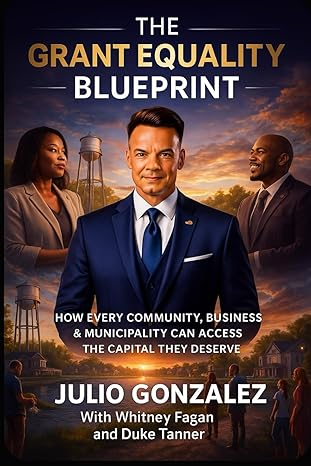
That challenge is at the center of a growing conversation sparked by tax strategist Julio Gonzalez in his new book, The Grant Equality Blueprint. The book examines a question many leaders quietly wonder: If so much funding exists, why do so few people successfully access it?
The Gap Between Funding and Access
For many first-time applicants, grant funding can feel more theoretical than practical. Lengthy applications, compliance requirements, and unfamiliar terminology often discourage potential applicants before they even begin the process.
According to Gonzalez, the issue is rarely a lack of available funding. Instead, it’s a lack of clear guidance on how the system actually works.
After decades of working within the U.S. tax and financial systems, Gonzalez began noticing that many business owners were unaware of the grant opportunities that could support their growth. That realization led him to create The Grant Equality Blueprint as a practical guide to understanding how grant programs operate and how applicants can prepare themselves to qualify.
Rather than presenting grants as distant or complicated programs, the book focuses on helping readers understand the structure behind them — turning what feels like an opaque process into something more navigable.
Real Stories Behind the Opportunity
Entrepreneur Kourtney Elizabeth Reppert contributes the foreword to the book, sharing her own experience building a career during the early days of social media. At the time, the industry had few established paths, forcing many professionals to create their own opportunities while balancing the demands of entrepreneurship and family life.
Reppert’s perspective reflects the reality that many founders operate without clear roadmaps or financial safety nets. Her involvement in the project highlights a desire to encourage more entrepreneurs — particularly women founders — to explore funding resources that could accelerate their growth.
Expanding Economic Opportunity
Another voice supporting the initiative is Duke Tanner, an advocate for economic inclusion and second chances. Tanner has spent years working with individuals who lack traditional access to financial networks but still have the drive to build businesses and contribute to their communities.
His perspective reinforces an important point: many capable entrepreneurs never pursue grant funding simply because they assume it isn’t meant for them.
Helping people understand that these programs are accessible — with the right preparation — is a key part of expanding economic opportunity.
Understanding the Technical Side
Navigating grants also requires understanding the technical elements behind the process. Whitney Fagan brings that perspective through her experience working with federal funding structures.
From documentation requirements to compliance standards, the details behind grant applications can often determine whether a proposal succeeds or fails. Fagan’s insights help translate these complex requirements into clearer guidance for applicants approaching grants for the first time.
Using Technology to Simplify the Process
Technology is also playing a role in making grants more accessible. Platforms like Subcity are designed to help organizations prepare for the grant process by organizing documentation, clarifying eligibility requirements, and guiding applicants through preparation steps before they submit proposals.
Tools like these can help level the playing field for small businesses and nonprofits that may not have full-time grant writing teams.
A Growing Conversation About Funding Access
Together, the perspectives of Gonzalez, Reppert, Tanner, and Fagan reflect a broader shift in how people are talking about economic opportunity.
Their shared message is simple: grant funding is not reserved for large institutions alone. With the right information and preparation, entrepreneurs, nonprofits, and community leaders can position themselves to access resources that already exist.
As conversations about funding access and economic equity continue to evolve, The Grant Equality Blueprint adds to a larger dialogue about how public resources are distributed — and how more people can learn to participate in the systems designed to support growth and innovation.
Readers interested in exploring the framework and ideas discussed in the book can access The Grant Equality Blueprint on Amazon:
👉 https://a.co/d/05oHDf27
In addition, entrepreneurs, nonprofit leaders, and prospective applicants can explore practical tools, resources, and grant readiness support through the official grant resource hub:
👉 https://grants.engineeredtaxadvisor.com
Angel Tuccy is a podcast host, 15-time best-selling author, and creator of the Author-licity™ and Pod-licity™ methods. She is known as the “Book Angel”. http://www.VisibilityBeforeBreakfast.com

Leave a Reply