
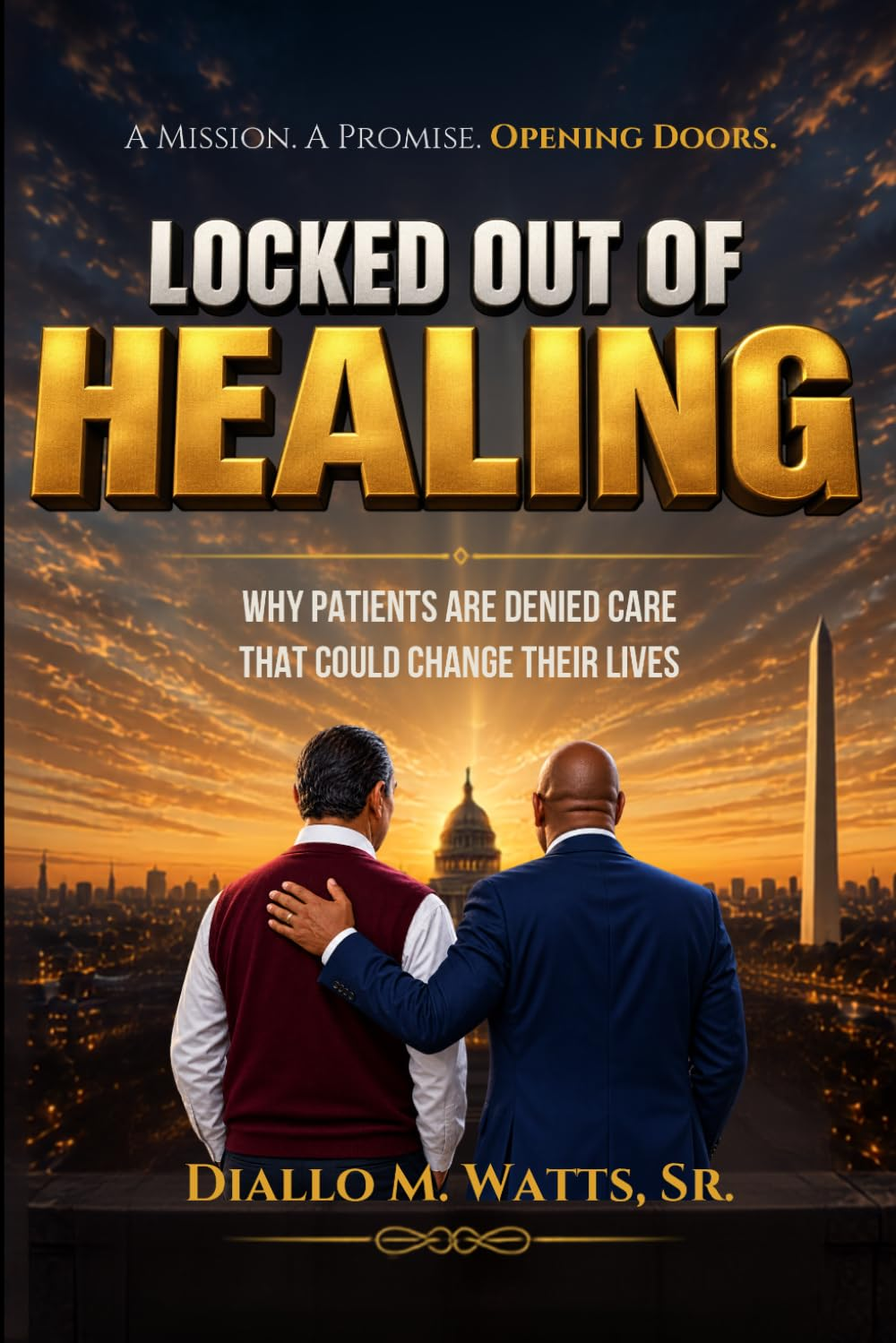
by Diallo M. Watts Sr.
My father, Darnell Watts, Sr., spent decades working for Metro in the Washington, D.C. area. He knew the roads, the routes, and the city so well that long before most of us carried GPS in our pockets, he carried the map in his head.
Then Alzheimer’s disease began taking that map away.
Like any family facing a diagnosis that changes everything, we searched for answers. I wanted to know what was available, what was being studied, what might help, and what questions we had not thought to ask. During that search, I learned about hyperbaric oxygen therapy, and that discovery eventually led me to something much bigger than the treatment itself.
I began to understand that in healthcare, available and accessible are not always the same thing.
A therapy can exist. Research can exist. Skilled doctors and medical facilities can exist. Yet a patient seeking a particular form of care may still have no practical way to reach it. Geography matters. Infrastructure matters. Economics matter. Awareness matters. The way care is delivered matters.
That realization stayed with me because I was not looking at the problem as an outsider. I was a son trying to help his father. I am also an engineer, and engineers are trained to look at systems, identify where they fail, and ask whether there is a better way to build them.
Locked Out of Healing is the story of what happened when those two parts of my life collided.
It follows my family’s experience with Alzheimer’s, the questions that came from searching for options, and the years that followed as I began looking more closely at the barriers surrounding access to hyperbaric medicine. That search eventually led to the founding of RxAir360 Inc., a medical device company working to expand access to hyperbaric oxygen therapy, and a mission I never expected to take on.
This is a personal story, not a promise of a miracle cure or an argument against doctors, hospitals, or conventional medicine. It’s about what happens when a family starts asking questions that don’t have easy answers, and what happens when one of those questions becomes impossible to let go.
I cannot change what happened to my father. I cannot go back and give our family information we did not have at the time.
What I can do is tell the story honestly, share what I discovered, and challenge all of us to think more seriously about the difference between creating medical options and making sure people can actually reach them.
My father’s illness started me on this journey. What I found along the way changed the direction of my life.
Leave a Reply